Dozens of spies working for the CIA were captured recently in Lebanon and Iran, current and former U.S. officials told The Associated Press and ABC News on Monday.
Showing posts with label spying. Show all posts
Monday, November 21, 2011
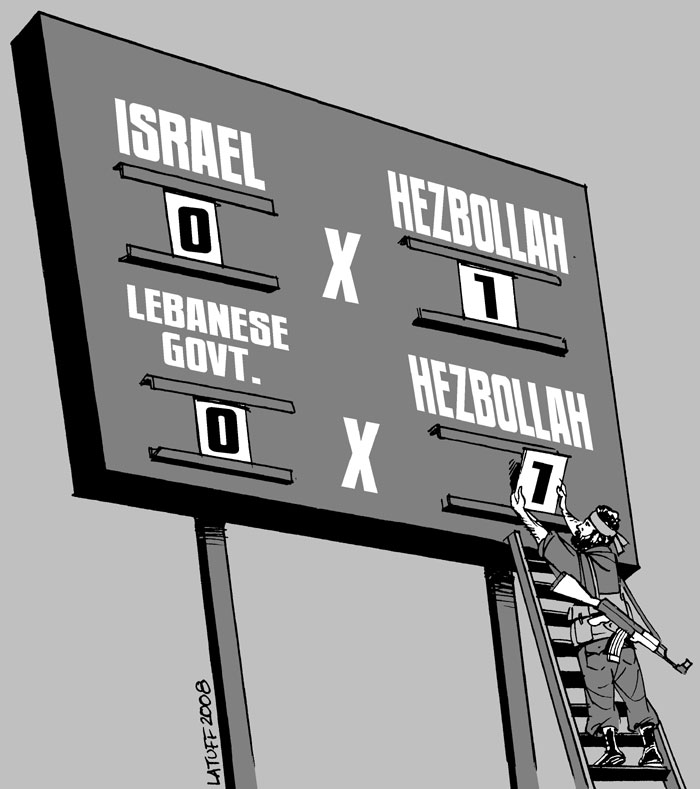
Hezbollah dismantles two major CIA spy rings in Lebanon and Iran
Report: Dozens of U.S. spies captured in Lebanon and Iran
Dozens of spies working for the CIA were captured recently in Lebanon and Iran, current and former U.S. officials told The Associated Press and ABC News on Monday.
The CIA’s operations in Lebanon have been badly damaged after Hezbollah identified and captured a number of the U.S. spies, officials told The Associated Press.
Hezbollah’s longtime leader, Sheik Hassan Nasrallah, boasted on television in June that he had rooted out at least two CIA spies who had infiltrated the ranks of Hezbollah, which the U.S. considers a terrorist group closely allied with Iran. Though the U.S. Embassy in Lebanon officially denied the accusation, current and former officials concede that it happened and the damage has spread even further.
According to a report by ABC News, there were two distinct espionage rings targeting Iran and Hezbollah in which spies were recruited by the CIA.
Current and former U.S. officials said the two different spy rings were discovered separately but both caused a significant setback in U.S. efforts to track Iran's nuclear activities and Hezbollah actions against Israel.
ABC reported that according to U.S. officials, the CIA used the codeword "Pizza" when discussing where to meet with the informants.
U.S. officials, however, deny any allegations that their agents were compromised at Pizza Hut, ABC reported.
In recent months, CIA officials have secretly been scrambling to protect their remaining spies — foreign assets or agents working for the agency — before Hezbollah can find them.
To be sure, some deaths are to be expected in shadowy spy wars. It’s an extremely risky business and people get killed. But the damage to the agency’s spy network in Lebanon has been greater than usual, several former and current U.S. officials said, speaking on condition of anonymity because they were not authorized to speak publicly about security matters.
The Lebanon crisis is the latest mishap involving CIA counterintelligence, the undermining or manipulating of the enemy’s ability to gather information. Former CIA officials have said that once-essential skill has been eroded as the agency shifted from outmaneuvering rival spy agencies to fighting terrorists. In the rush for immediate results, former officers say, tradecraft has suffered.
The most recent high-profile example was the suicide bomber who posed as an informant and killed seven CIA employees and wounded six others in Khost, Afghanistan in December 2009.
Last year, then-CIA director Leon Panetta said the agency had to maintain “a greater awareness of counterintelligence.” But eight months later, Nasrallah let the world know he had bested the CIA, demonstrating that the agency still struggles with this critical aspect of spying and sending a message to those who would betray Hezbollah.
The CIA was well aware the spies were vulnerable in Lebanon. CIA officials were warned, including the chief of the unit that supervises Hezbollah operations from CIA headquarters in Langley, Va., and the head of counterintelligence. It remains unclear whether anyone has been or will be held accountable in the wake of this counterintelligence disaster or whether the incident will affect the CIA’s ability to recruit assets in Lebanon.
In response to AP’s questions about what happened in Lebanon, a U.S. official said Hezbollah is recognized as a complicated enemy responsible for killing more Americans than any other terrorist group before September 2001. The agency does not underestimate the organization, the official said.
The CIA’s toughest adversaries, like Hezbollah and Iran, have for years been improving their ability to hunt spies, relying on patience and guile to exploit counterintelligence holes.
In 2007, for instance, when Ali-Reza Asgari, a brigadier general in the Islamic Revolutionary Guards Corps of Iran, disappeared in Turkey, it was assumed that he was either killed or defected. In response, the Iranian government began a painstaking review of foreign travel by its citizens, particularly to places like Turkey where Iranians don’t need a visa and could meet with foreign intelligence services.
It didn’t take long, a Western intelligence official told the AP, before the U.S., Britain and Israel began losing contact with some of their Iranian spies.
The State Department last year described Hezbollah as “the most technically capable terrorist group in the world,” and the Defense Department estimates it receives between $100 million and $200 million per year in funding from Iran.
Backed by Iran, Hezbollah has built a professional counterintelligence apparatus that Nasrallah — whom the U.S. government designated an international terrorist a decade ago — proudly describes as the “spy combat unit.” U.S. intelligence officials believe the unit, which is considered formidable and ruthless, went operational in about 2004.
Using the latest commercial software, Nasrallah’s spy-hunters unit began methodically searching for spies in Hezbollah’s midst. To find them, U.S. officials said, Hezbollah examined cellphone data looking for anomalies. The analysis identified cellphones that, for instance, were used rarely or always from specific locations and only for a short period of time. Then it came down to old-fashioned, shoe-leather detective work: Who in that area had information that might be worth selling to the enemy?
The effort took years but eventually Hezbollah, and later the Lebanese government, began making arrests. By one estimate, 100 Israeli assets were apprehended as the news made headlines across the region in 2009. Some of those suspected Israeli spies worked for telecommunications companies and served in the military.
Back at CIA headquarters, the arrests alarmed senior officials. The agency prepared a study on its own vulnerabilities, U.S. officials said, and the results proved to be prescient.
The analysis concluded that the CIA was susceptible to the same analysis that had compromised the Israelis, the officials said.
CIA managers were instructed to be extra careful about handling sources in Lebanon. A U.S. official said recommendations were issued to counter the potential problem.
But it’s unclear what preventive measures were taken by the Hezbollah unit chief or the officer in charge of the Beirut station. Former officials say the Hezbollah unit chief is no stranger to the necessity of counterintelligence and knew the risks. The unit chief has worked overseas in hostile environments like Afghanistan and played an important role in the capture of a top terrorist while stationed in the Persian Gulf region after the attacks of 9/11.
“We’ve lost a lot of people in Beirut over the years, so everyone should know the drill,” said a former Middle East case officer familiar with the situation.
But whatever actions the CIA took, they were not enough. Like the Israelis, bad tradecraft doomed these CIA assets and the agency ultimately failed to protect them, an official said. In some instances, CIA officers fell into predictable patterns when meeting their sources, the official said.
This allowed Hezbollah to identify assets and case officers and unravel at least part of the CIA’s spy network in Lebanon. There was also a reluctance to share cases and some files were put in “restricted handling.” The designation severely limits the number of people who know the identity of the source but also reduces the number of experts who could spot problems that might lead to their discovery, officials said.
Nasrallah’s televised announcement in June was followed by finger-pointing among departments inside the CIA as the spy agency tried figure out what went wrong and contain the damage.
The fate of these CIA assets is unknown. Hezbollah treats spies differently, said Matthew Levitt, a counterterrorism and intelligence expert at the Washington Institute for Near East Studies who’s writing a book about the terrorist organization
“It all depends on who these guys were and what they have to say,” Levitt said. “Hezbollah has disappeared people before. Others they have kept around.”
Who’s responsible for the mess in Lebanon? It’s not clear. The chief of Hezbollah operations at CIA headquarters continues to run the unit that also focuses on Iranians and Palestinians. The CIA’s top counterintelligence officer, who was one of the most senior women in the clandestine service, recently retired after approximately five years in the job. She is credited with some important cases, including the recent arrests of Russian spies who had been living in the U.S. for years.
Officials said the woman was succeeded by a more experienced operations officer. That officer has held important posts in Moscow, Southeast Asia, Europe and the Balkans, important frontlines of the agency’s spy wars with foreign intelligence services and terrorist organizations.
Tuesday, October 20, 2009
U.S. Arrests Ex-NASA Scientist over Bid to Spy for Israel
al-Manar reports:
A top American scientist who once worked for the Pentagon and the US space agency NASA was arrested Monday and charged with attempted spying for Israel, the Department of Justice said.
The Justice Department said Stewart David Nozette, 52, of suburban Chevy Chase, Maryland, was charged in a criminal complaint with attempting to communicate, deliver and transmit classified information to an individual he believed to be an Israeli intelligence officer.
In Tel Aviv, where the story broke late at night, Israeli government officials had no immediate comment.
Nozette was arrested Monday by FBI agents. He is expected to make his initial appearance in federal court in Washington on Tuesday.
"The conduct alleged in this complaint is serious and should serve as a warning to anyone who would consider compromising our nation's secrets for profit," said David Kris, assistant attorney general for national security.
In addition to stints with NASA and the Department of Energy, Nozette worked at the White House on the National Space Council under then-president George H.W. Bush in 1989 and 1990.
"From 1989 through 2006, Nozette held security clearances as high as top secret and had regular, frequent access to classified information and documents related to the US national defense," the Justice Department said.
He developed the Clementine biostatic radar experiment that purportedly discovered water on the south pole of the moon. He worked from approximately 1990 to 1999 at the Department of Energy's Lawrence Livermore National Laboratory in California, where he designed highly advanced technology.
In early September, Nozette received a phone call from a person "purporting to be an Israeli intelligence officer, but who was in fact an undercover employee of the FBI," the DOJ said.
"Nozette met with the UCE (undercover employee) that day and discussed his willingness to work for Israeli intelligence," informing the agent that "he had, in the past, held top security clearances and had access to US satellite information."
The scientist offered to "answer questions about this information in exchange for money."
Over the next several weeks, Nozette and the undercover agent exchanged envelopes of money for answers to lists of questions about US satellite technology.
"In addition, Nozette allegedly offered to reveal additional classified information that directly concerned nuclear weaponry, military spacecraft or satellites, and other major weapons systems," DOJ said.
FBI agents retrieved a manila envelope left by Nozette in a designated location this month that "contained information classified as both top secret and secret that concerned US satellites, early warning systems, means of defense or retaliation against large-scale attack, communications intelligence information, and major elements of defense strategy."
Since the arrest and conviction of Jonathan Pollard for spying for Israel, all Israeli officials, including intelligence officers, are instructed to avoid any activity that could be interpreted as information harvesting in the United States, and to reject any approach by American or other citizens who seek to volunteer and provide intelligence or espionage services for Israel.
In 2005, two former pro-Israel lobbyists with AIPAC were charged with conspiring to communicate national defense information to unauthorized personnel, in violation of the 1917 Espionage Act. The indictment said the classified material included information about the al-Qaida terror network, the bombing of the Khobar Towers dormitory in Saudi Arabia that killed 19 U.S. Air Force personnel, and U.S. policy in Iran. The case against Steven J. Rosen and Keith Weissman was eventually dropped.
-------
Commentary: The really interesting story here is that the FBI conducts sting operations posing as Mossad operatives. This, in the world of intelligence, is a very telling thing to do as it basically shows that the FBI is trying to distrupt such (real) efforts by the Israelis. I don't think that such an operation would be authorized without the knowledge of the White House and that, in turn, suggests to me that there are at least some elements in the current Administration who are trying to curb some of the most obnoxious operations of the Isarelis in the USA. Either that, or there is infighting inside the Mossad (again). Either way, it is worth keeping an eye on this story.
A top American scientist who once worked for the Pentagon and the US space agency NASA was arrested Monday and charged with attempted spying for Israel, the Department of Justice said.
The Justice Department said Stewart David Nozette, 52, of suburban Chevy Chase, Maryland, was charged in a criminal complaint with attempting to communicate, deliver and transmit classified information to an individual he believed to be an Israeli intelligence officer.
In Tel Aviv, where the story broke late at night, Israeli government officials had no immediate comment.
Nozette was arrested Monday by FBI agents. He is expected to make his initial appearance in federal court in Washington on Tuesday.
"The conduct alleged in this complaint is serious and should serve as a warning to anyone who would consider compromising our nation's secrets for profit," said David Kris, assistant attorney general for national security.
In addition to stints with NASA and the Department of Energy, Nozette worked at the White House on the National Space Council under then-president George H.W. Bush in 1989 and 1990.
"From 1989 through 2006, Nozette held security clearances as high as top secret and had regular, frequent access to classified information and documents related to the US national defense," the Justice Department said.He developed the Clementine biostatic radar experiment that purportedly discovered water on the south pole of the moon. He worked from approximately 1990 to 1999 at the Department of Energy's Lawrence Livermore National Laboratory in California, where he designed highly advanced technology.
In early September, Nozette received a phone call from a person "purporting to be an Israeli intelligence officer, but who was in fact an undercover employee of the FBI," the DOJ said.
"Nozette met with the UCE (undercover employee) that day and discussed his willingness to work for Israeli intelligence," informing the agent that "he had, in the past, held top security clearances and had access to US satellite information."
The scientist offered to "answer questions about this information in exchange for money."
Over the next several weeks, Nozette and the undercover agent exchanged envelopes of money for answers to lists of questions about US satellite technology.
"In addition, Nozette allegedly offered to reveal additional classified information that directly concerned nuclear weaponry, military spacecraft or satellites, and other major weapons systems," DOJ said.
FBI agents retrieved a manila envelope left by Nozette in a designated location this month that "contained information classified as both top secret and secret that concerned US satellites, early warning systems, means of defense or retaliation against large-scale attack, communications intelligence information, and major elements of defense strategy."
Since the arrest and conviction of Jonathan Pollard for spying for Israel, all Israeli officials, including intelligence officers, are instructed to avoid any activity that could be interpreted as information harvesting in the United States, and to reject any approach by American or other citizens who seek to volunteer and provide intelligence or espionage services for Israel.
In 2005, two former pro-Israel lobbyists with AIPAC were charged with conspiring to communicate national defense information to unauthorized personnel, in violation of the 1917 Espionage Act. The indictment said the classified material included information about the al-Qaida terror network, the bombing of the Khobar Towers dormitory in Saudi Arabia that killed 19 U.S. Air Force personnel, and U.S. policy in Iran. The case against Steven J. Rosen and Keith Weissman was eventually dropped.
-------
Commentary: The really interesting story here is that the FBI conducts sting operations posing as Mossad operatives. This, in the world of intelligence, is a very telling thing to do as it basically shows that the FBI is trying to distrupt such (real) efforts by the Israelis. I don't think that such an operation would be authorized without the knowledge of the White House and that, in turn, suggests to me that there are at least some elements in the current Administration who are trying to curb some of the most obnoxious operations of the Isarelis in the USA. Either that, or there is infighting inside the Mossad (again). Either way, it is worth keeping an eye on this story.
Friday, May 1, 2009
Feds drop charges against AIPAC spies
If there was any doubt at all that the USA is an Israeli colony, here is the proof:
(AP via Yahoo): ALEXANDRIA, Va. – Federal prosecutors moved Friday to dismiss espionage-related charges against two former pro-Israel lobbyists accused of disclosing classified U.S. defense information, ending a tortuous inside-the-Beltway legal battle rife with national security intrigue.
Critics of the prosecution of Steven Rosen and Keith Weissman of the American Israel Public Affairs Committee accused the federal government of trying to criminalize the sort of back-channel discussions between government officials, lobbyists and reporters that are commonplace in the nation's capital. AIPAC is an influential pro-Israel lobbying group.
Acting U.S. Attorney Dana Boente said the government moved to dismiss the charges in the drawn-out case after concluding that pretrial rulings would make it too difficult for the government to prove its case.
Boente also said he was worried that classified information would be disclosed at trial.
U.S. District Judge T.S. Ellis III had made several legal rulings that prosecutors worried would make it almost impossible to obtain a guilty verdict. Among them was a requirement that the government would have to prove that Rosen and Weissman knew they were harming the United States by trading in sensitive national defense information.
The defense had also been prepared to put on a strong case that the information obtained by Rosen and Weissman, while technically classified, was not truly secret and that its disclosure was irrelevant to the nation's security.
The federal government's former arbiter of classification, J. William Leonard, was prepared to testify for the defense that the government overuses classification and applies the label to information that by any practical measure does not need to be secret. The government had sought to bar Leonard's testimony.
The trial had been scheduled to start June 2 in a case first brought in 2005.
Rosen and Weissman had not been charged with actual espionage, although the charges did fall under provisions of the 1917 Espionage Act, a rarely used World War I-era law that had never before been applied to lobbyists.
Weissman's lawyer, Baruch Weiss, called the dismissal a "huge victory for the First Amendment." Had Rosen and Weissman been convicted, he said it would have set a precedent for prosecuting reporters any time they obtained information from government officials that was later deemed too sensitive to be disclosed.
While Weissman was overjoyed to learn the charges will be dismissed, Weiss said that the four-year prosecution "has been a tremendous hardship for both Rosen and Weissman," who have been unable to work while the charges have hung over their head and they faced the prospect of a lengthy jail term.
A former Defense Department official, Lawrence A. Franklin, previously pleaded guilty to providing Rosen and Weissman classified defense information and was sentenced to more than 12 years in prison.
Had the case gone to trial, Rosen and Weissman had won the right to subpoena former Secretary of State Condoleezza Rice and other top Bush administration officials. The defense believed their testimony would support the claim that the United States regularly uses AIPAC to send back-channel communications to Israel. Prosecutors had sought unsuccessfully to quash the subpoenas.
The indictment had alleged that Rosen and Weissman conspired to obtain and then disclosed classified information on U.S. policy toward Iran, as well as information on the al-Qaida terror network and the bombing of the Khobar Towers dormitory in Saudi Arabia, which killed 19 U.S. Air Force personnel.
It will be up to Ellis to formally dismiss the charges, but it would be highly unlikely that he would refuse the government's request for dismissal.
AIPAC spokesman Patrick Dorton said the organization is "pleased that the Justice Department has dismissed the charges. This is a great day for Steve Rosen, Keith Weissman and their families."
AIPAC fired Rosen and Weissman in April 2005, when they were under investigation but had not yet been charged. Dorton declined to comment on whether AIPAC still thinks Rosen and Weissman acted improperly.
The government's decision also won praise from the American Jewish Committee.
"The Department of Justice has now reaffirmed that the law of the United States protects citizens who engage in the everyday and essential work of political advocacy," said AJC Executive Director David Harris.
Subscribe to:
Posts (Atom)