Showing posts with label KSA. Show all posts

Sunday, December 22, 2013

Threats from the House of Saud: real or hot air?

Last week, HRH Prince Mohammed bin Nawaf bin Abdulaziz al Saud, Saudi Arabia’s ambassador to Britain and a member of the House of Saud, wrote an op-ed piece in the New York Times entitled "Saudi Arabia Will Go It Alone".  Besides the usual ideological propaganda statements and a predictable litany of Saudi complaints about the West not doing enough, the piece contains a definite though vague threat:
The foreign policy choices being made in some Western capitals risk the stability of the region and, potentially, the security of the whole
Arab world. This means the Kingdom of Saudi Arabia has no choice but to become more assertive in international affairs: more determined than ever to stand up for the genuine stability our region so desperately needs.  (...)  We will act to fulfill these responsibilities, with or without the support of our Western partners. Nothing is ruled out in our pursuit of sustainable peace and stability in the Arab World as King Abdullah — then Saudi Arabia’s Crown Prince — showed with his leadership of the 2002 Arab Peace Initiative to resolve the Israeli-Palestinian conflict (...)  We continue to show our determination through our support for the Free Syrian Army and the Syrian opposition. It is too easy for some in the West to use the threat of Al Qaeda’s terrorist operations in Syria as an excuse for hesitation and inaction. Al Qaeda’s activities are a symptom of the international community’s failure to intervene. They should not become a justification for inaction. The way to prevent the rise of extremism in Syria — and elsewhere — is to support the champions of moderation: financially, materially and yes, militarily, if necessary (...) Saudi Arabia will continue on this new track for as long as proves necessary.
Much is said here, much is alluded to and much remains unsaid.  Let's parse this text for the key words: more assertive, nothing ruled out, determined to support the "Syrian opposition" financially, materially and militarily.  Sounds impressive, but is it really?  What can the Saudis really do?  Let's look at their options:

1) Continue to pour money into the international Jihadist gang which has been waging war on Syria for several years: yes, that is an option, but that is nothing new, the Saudis, and their allies, have already been doing that for a long while and it did not help the insurgency.  Pouring even more money into a largely defeated insurgency will really only serve to foster corruption and infighting and won't do anything to reverse the situation.

2) Continue to send weapons to the insurgency: just as with money, the Saudis and their allies have already been doing this too, and it did them no good.  Why?  Because the insurgency has enough light weapons anyway, whereas bigger, more complex, weapons systems are harder to deliver and they need trained personnel to operate.  Even more importantly, a few canons, tanks or multiple rocket launchers cannot be used effectively unless there is a full system of support around them: logistics, ammunition, intelligence, forward artillery controllers, etc.  There is a reason why even when they could seize such weapons from government forces insurgencies rarely could use them effectively.

3) Directly intervene in Syria: well, he did say that "nothing is ruled out", didn't he?  So could the Saudis simply send their military across the border and attack the government forces?  Nope.  Why?  Simply because they do not share a common border and to get to Syria the Saudis would have to cross through western Iraq or Jordan.  Could the Saudis send their air force to provide support to the insurgency? Yes but, again, that would mean overflying Iraq or Jordan, and the Saudis could only do that with the agreement of CENTCOM which is highly unlikely, to say the least (more about that later).

4) Attack Iran or let the Israelis use Saudi airfields for an attack on Iran: sounds crazy, doesn't it?  But think about again.  First, after decades of semi-secret collaboration the Saudis and the Israelis have recently upgraded their relationship to something looking like a semi-official love story.  And, look at the example of "nothing is ruled out" which Prince Mohammed gives in his text: the Saudi 2002 "Peace Initiative" offered to Israel.  So if really "nothing is ruled out" then we should not rule out a sudden "strategic rapprochement" between the two crazy religious and racist regimes in the Middle East: the KSA and the Israel. Neither should we rule out a possible joint action against Iran by these two rogue states who now make no secret that feel that the Obama Administration is letting them down.  Scary though?  Yes, but considering the lunatics involved, one which we need to consider.

What is the main impediment for an Israel attack on Iran?  Distance.

Sure, the Israelis could use ballistic or cruise missiles, but they would not provide the kind of flexible capabilities needed to severely degrade Iranian nuclear facilities and associated research centers.  That is a job for the air force.  The problem for the Israeli Air Force is not only that it does not have a common border with Iran and that they would need to get all sorts of authorizations to cross the airspace between Israel and Iran, but also that considering the distances involved an airstrike would require air-to-air refueling which, in turn, would require even more aircraft in the air to protect strike force.  To make things worse, Iran is a big country, so several strike groups should be sent to different target groups to hit them and each strike group would have to be refueled, protected, and allowed to penetrate into Iranian airspace by dedicated suppression of enemy air defenses aircraft, including strike and electronic warfare aircraft.  Bottom line - it would be a huge operation and one which the Israelis simply cannot carry out.  But what if we assume that they could use Saudi airfields?

This option does not solve all problems, but it does address a lot of the worst problems involved in a direct attack from Israel.  First, if the Israelis were allowed to refuel in Saudi Arabia, they would not need to rely on always very complicated and dangerous air-to-air refueling.  That would immediately free many aircraft for other tasks.  Second, taking off from Saudi Arabia would place all of Iran well within the reach of Israeli strike aircraft which could then be "spread" all over the Iranian airspace to support each other.  The Israelis could even deploy helicopters to rescue
any downed pilot.  Third, taking off from Saudi Arabia would make it possible to attack some key Iranian targets with little or no warning since they are literally across the Persian Gulf.  The nuclear site at Bushehr could be revisited many times by successive waves from strike aircraft until the bomb damage assessment confirms that the target has been destroyed.  Furthermore, if the KSA takes the decision to offer its airfields to the Israeli Air Force it might as well offer military support, if only to protect itself.  If the Saudi Air Force decided to support the Israeli attack - especially with its AWACs and F-15s - it would make a huge difference.  The bottom line is this: if the Saudis and the Isarelis really decided to join forces they could strike Iran in a way which the Israelis alone could never hope for.  This would probably be a done deal by now if not for one big problem: CENTCOM.

All the fancy scenarios about a joint KSA-Isareli attack have to assume that the US CENTCOM would, at the very least, stand by and let such an attack proceed without taking any action.  This is highly unlikely because the Americans understand perfectly that any Iranian retaliatory strike would be primarily directed at them at which point the US would be as involved as the KSA or Israel.  From the American point of view, it would make no sense at all to let the Israelis and the Saudis start a war which would immediately result in the USA being involved.  At that point, the USA would be far better off starting the war by itself not only because the USAF and Navy are far more powerful and capable than the combined forces of Israel and the KSA, but primarily because the USA would be in control of the time, scope and manner of execution of the attack.  The USA, however, is clearly not interested in starting a war with Iran.

Knowing the Israelis, I am sure that they have carefully considered the option of simply ignoring Washington and going ahead with their customary chutzpah: let's start the war for the goyim - they won't dare stopping us anyway - and then see how they handle it.

Sounds crazy?  Yes, of course.  Because it is.  Too crazy for the Saudis and the Israelis?  I am not so sure.  The Saudis fully understand that if Assad remains in power this would make the so-called "Shia crescent" even more powerful than before the war against Syria started.  They also understand that if Assad is allowed to remain in power, the chances of a US attack on Iran will dramatically decrease, leaving them terrified of what their powerful neighbor might do.  The same goes for Israel which, for its own reasons, is also terrified of the Shia alliance of Hezbollah - Syria - Iran.  There can be no doubt at all that the Israelis and the Saudis would do anything for the Americans to get rid of the Shia threat against them.  But it appears that at least for the time being the USA does not want to comply with their crazy wish.

But would the Americans dare to use force to stop an Israeli attack on Iran?

That is really the key question and while we will only have a definitive answer to that if such a situation happens, I personally strongly believe that yes, the Americans would basically tell the Israelis to "turn back or else..."

Why?

Because what is at stake here is much more than just a local fight between Shia, Wahabis and Zionists: a US-Iranian war would inflame all of the Middle-East and possible spread way beyond this region.  According to some models, it could even result in a World War.  And that is something which Obama or, rather, those who put Obama into the White House do not want.  For all his long list of failings and screw-ups, there is one thing of significance which did do: he got rid of most of the Neocons and now the "Israel Firsters" have been replaced by "USA Firsters" and the latter have absolutely no intention to risk it all for the benefit of two rogue states lead by psychopaths.  It is impossible to prove it, but my guess is that, if really pushed into a corner by the usual Israeli arrogance, the Americans will use force to prevent an unauthorized Israeli attack on Iran.

For one thing, it is not too hard to conceal from the general public what really took place in the airspace over Saudi Arabia in the middle of the night.  Second, if the Americans actually open fire on the Israeli strike force, the Israelis will have no other option than to turn back.  Finally, the Americans also have a much simpler option: they can prevent the Israelis from refueling on the Saudi airfields.

In other words, this Saudi-Israeli attack ain't happening, at least as long as Obama or his allies are in the White House.

It appears that for all his grand statements about Saudi Arabia going at it alone, Prince Mohammed cannot back his words with some meaningful action.  The House of Saud and the Netanyahu can make all the bellicose statements they want - unless Uncle Sam allows it there is absolutely nothing they can do.  CENTCOM is the real master and overlord of the Middle-East and as long as CENTCOM does not want something - it ain't happening.

The Saker

Friday, October 25, 2013

Has Saudi spy chief Prince Bandar bin Sultan gone completely insane?

(Originally written for the Asia Times)

All signs are showing that the otherwise secretive Saudi regime is angry.  Very, very angry.  Not only did the KSA refuse to take a seat at the UNSC, but now the Saudi spy chief, Prince Bandar bin Sultan, appears to be threatening the USA with a "major shift" in "relations with the United States in protest at its perceived inaction over the Syria war and its overtures to Iran".  The WSJ provides some further details:
In the run-up to the expected U.S. strikes, Saudi leaders asked for detailed U.S. plans for posting Navy ships to guard the Saudi oil center, the Eastern Province, during any strike on Syria, an official familiar with that discussion said. The Saudis were surprised when the Americans told them U.S. ships wouldn't be able to fully protect the oil region, the official said.

Disappointed, the Saudis told the U.S. that they were open to alternatives to their long-standing defense partnership, emphasizing that they would look for good weapons at good prices, whatever the source, the official said.

In the second episode, one Western diplomat described Saudi Arabia as eager to be a military partner in what was to have been the U.S.-led military strikes on Syria. As part of that, the Saudis asked to be given the list of military targets for the proposed strikes. The Saudis indicated they never got the information, the diplomat said.
Bandar (aka Bandar bin Sultan bin Abdulaziz Al Saud)  spent most of his career in Washington DC where he was the Saudi ambassador from 1983 to 2005 where he was considered exceptionally close to the Bush family.  Not only that, he could observe, as no one else could, how the US went to war against Iraq not once, but twice, in 1991-1992 and, again, in 2003-2005.  So he, of all people, should now that a) the USA does not have the physical capability to "fully protect" the entire oil region of the KSA and b) that the US would only share a critical proposed strike list with close Anglo allies (the UK and, maybe, some other Anglo country).  Not even the Israelis or the French would be given that kind of access.

So what in the world is Bandar upset about?!

Sure, there are other good reasons for him to be angry: the entire Saudi strategic plan to defeat the Shia in the Middle-East has fallen apart.

The Saudis wanted to trigger an insurrection in Syria, then execute a "false flag" chemical attack, then have the USA take out the Syrian regime and replace it with a Saudi puppet regime of Wahabi liver-eaters.  That would isolate both Hezbollah and Iran.  The Saudis would let the Israelis deal with Hezbollah while they would then push the USA into a confrontation with Iran.

As strategic plans go, this was a pretty good one too but it was based on a fundamental misunderstanding the of Russian, Iranian and Hezbollah determination to defeat it.  We know that Russia sent a very powerful naval task force to the Syrian coast, we have pretty good information showing that Iran covertly sent both equipment and combatants to Syria and Hezbollah publicly admitted that it sent several thousands of its combatants into Syria.  These combatants are really those who turned the tide of the war on the ground (especially around al-Qusayr).  What we don't know (but what must have happened for sure) is what Russia, Iran and Hezbollah told the USA through their back-channel communications.  I personally have a very strong feeling that some very serious threats were made by one or several of these parties and that these threats were taken very seriously by the White House.  Yes, of course, we then had Kerry's "rhetorical point" about Syria giving up chemical weapons, but there are plenty of indicators that the US had already decided to "fold" 2-3 days before this actually occurred.  Whatever may be the case, it is clear that the US took the only possible sane decision and decided that it did not want to start a major war in the Middle-East.

Did the Saudis really think that the USA would take on Syria, Hezbollah, Iran and Russia on their behalf?

Now let's look at the Saudi reaction.  First, they refused to take their seat at the UNSC.  So what?!  With the predictable exception of Kuwait and Bahrain, who is going to be heartbroken at not having the Saudis sit at the UNSC?!  Kosovo?

And now comes this threat of a "major shift" in the US-Saudi alliance.

What in the world is Bandar talking about again?!

First, does Bandar really believe that the USA vitally needs the KSA?  Does he not realize that the USA be self-sufficient in energy pretty soon?  Or does he not realize that the days when ARAMCO was the key to the strength of the dollar are long gone and that now the strength of the dollar depends mostly on US military and financial power?  And even if the KSA was vital to the strength of the dollar, does Bandar really think that he can threaten US vital strategic interests with impunity?

Second, if Bandar wants to shift away from the alliance with the USA, where does he think he could shift to?!  Most definitely not China which has a very serious "Islamic problem" on its hands in its western provinces, not the EU which is faithfully committed to its colonial status in the US Empire, and nobody in Africa - even less so after the recent carnage in Kenya.  Nobody in Latin America for sure, if only because of its long history of anti-US struggle and its large Arab population which know what kind of sick ideology Wahabism is.  In Asia, maybe the desperate rulers of the DPRK or Burma would want to explore options, but that's about it.  So unless Bandar thinks he can punish the US by shifting its alliance to some "heavyweights" like Kuwait or Bahrain, one can only be left wondering of what Bandar has in mind.

Think about it: first he threatens Putin with terror attacks during the Sochi Olympics and now he threatens the USA with "dumping" it?!  This would be comical if the House of Saud was not sitting on a huge amount of money which they have - and will - use to spread terror and Wahabi extremism all over the planet.

Which brings me to my last question: does Bandar really not understand how fragile his regime is?  

Does he seriously believe that he can threaten both the US and Russia and get away with it?

Maybe the poor man believes that the Bush clan will do something about it, but if so, then that hope misplaced.  Sure, the Bush family and the House of Saud are old accomplices in all sorts of ugly deals, but not only are the Bush people currently not in power, but they will always love their money more than they will love their friends.  And the truth is, neither the Bush family nor even the USA need the Saudis all that much.

The reverse, however, is not true.  The Wahabi house of Saudi is sitting on top of a treasure trove of Shia oil (the oil rich regions of the KSA are also the ones where a repressed Shia minority lives).  Both Bahraini and the Saudi regimes have held on to power only thanks to a ruthless and systematic repression against its population, especially the Shia.  For the Wahabis, to stay in power means killing Shia, lots of Shia.  And to do that, one needs a "protector" at the UNSC.  In the case of the KSA, this protector has always been the USA.  But just imagine what could happen if the USA withdrew its protection of the KSA at the UNSC.  Imagine what kind of signal that would send to the repressed Shia in these two countries?  Without even going into a R2P situation, it is pretty obvious that the Saudi regime only serves "at the pleasure of the US President" and that it could be summarily dismissed.

But Bandar seems to be completely oblivious to that.

My personal feeling is that Bandar must have gone clinically insane.  Either that or it is the entire House of Saud has gone mad, maybe as a consequence of its degenerate lifestyle.  Who knows?

If Bandar is "retired: - administratively or physically -  sooner rather than later, then its option one.  If not, then its option two.  But either way, the writing is on the wall for the House of Saud.

The Saker

Tuesday, August 6, 2013

Soraya Sepahpour-Ulrich on Iran's political course after elections

 
Comment: As always, Soraya brings up an important point - the consistently nefarious role of Saudi Arabia which, on one hand, acts like the US and Israeli "poodle" when it closes its airspace to a President whose trips it does not approve of, but which on the other hand strives to impersonate some kind of regional power.  Therein lies the key contradiction: you cannot be somebody's vassal state *and* a pretend credible regional power, hence the truly nasty, toxic and consistently evil stance the KSA takes on everything, from its medieval internal policies to its systematic involvement into any conflict in the region.

Frankly, if it wasn't for a multi-billion "respectability" PR campaign and for all the money the Saudis gladly hand out to westerner, the KSA would share the podium with the DPRK and Israel as one of the most corrupt, disgusting, immoral and outright crazy regime on the planet.

The Saker

Tuesday, April 2, 2013

The USA - in bed with the worst of the worst

Please take a look at this article from the al-Akhbar English language website. I think that it is extremely interesting as it shows the true face of the Saudi Kingdom, not one of modernism and progress, but one of crass pre-medieval barbarity.  Let me point of a few things here:


Wahabi crucifixion in Yemen
a) Crucifixion as a method of executing is legal in Saudi Arabia.  Yup, that's right.  What the pagan Romans did 2000 year ago, the Saudi Wahabi still do today, and its all legal.

b) The Saudis practice dismemberment. Now that practice has far more recent precedents, in particular in the European Middle-Ages.

c) The person they want to crucify is a Shia cleric. Yes, you read that right - a Shia cleric. The charges against him?  “inciting sectarian strife,” “aiding terrorists,” and “insulting Gulf leaders and scholars.”  Translated into plain English these would read: support for the cause of the oppressed Shia minority in the KSA, having contacts with Iran, criticizing Wahabism.  In other words, he is clearly a "prisoner of conscience", a political prisoner, somebody charged with political crimes and not actual criminal violations.


Do you remember Sakineh Mohammadi Ashtiani?  She is an Iranian woman sentenced to death by stoning for the murder of her husband by a court in Tabriz.  Her case the entire planet erupted in protests, and even many friends of Iran used all their connections to have this sentence overturned which, eventually, it was.  Her final status is still unsure.

Now, as an Orthodox Christian I oppose the death penalty on principle.  Furthermore, the idea that the all-loving and infinitely merciful God would want anybody to be executed by stoning, crucifixion or dismemberment strikes me as absolutely preposterous and outright blasphemous.  I therefore am absolutely appalled that a court in Iran would be capable of handing down such a barbaric sentence.  However, having said that, I do not some striking differences between the two cases.


Sheikh Nimr al-Nimr
Ashtiani was accused of murder. Sheikh Nimr al-Nimr has not committed any violent crime.  Then, Ashtiani's case triggered a huge worldwide wave of outrage.  Has anybody even heard about the case of Sheikh Nimr al-Nimr?  Not the Western "human rights" organizations for sure.  They are probably too busy presenting the "Pussy Riot" group as a noble defender of free speech...

I have written many times here that the Zionist entity called "Israel" is an abomination, a stain on the honor of the entire planet, a disgrace for all of mankind: it is the last openly racist state on the planet and it's ideology actually makes the claim that Jewish racism is God-given.  Yes, I still believe that Israel is truly the worst abomination on the planet.  But I would rank Saudi Arabia as a clear second worst regime.  Both Israel and the KSA are anachronisms is the sense that their true ideology is medieval in its barbarity and fundamentally aggressive and violent by nature.

And yet, these are the closest allies of the USA in the region.  The USA, Israel and the KSA - talk about an axis of evil!  Talk about "rogue nations"!

And yet, who stands up to these two murderous and crazed regimes?  Really only Iran.  Everybody else either lacks to guts to say anything, or they actively collaborate with these states and their respective lobbies in the USA.


And in the meantime, while the USA is subsidising these to satanic regimes with billions of dollars, the Zionists and the Wahabis are destablizing countries worldwide.  As for Iran, the only country to truly stand up and resist these two abominations, it is the victim of international sanctions under the totally fallacious pretext that one day Iran "might" develop a nuclear weapon while being under the stricest of monitoring by the IAEA.

It is undeniable that the USA is "in bed" with the worst of the worst, regimes which are so evil and corrupt as to justify their worst abominations by claiming that this is the Will of God.

I can only hope that the BRICS countries will now reach out to Iran and help it economically and politically.

The Saker

Wednesday, March 9, 2011

Is Saudi Arabia next? If so, that could very dangerous

RT TV has just announced that the Shia of Saudi Arabia have declared that this Friday will be a "day of rage".

Considering that the US Empire will use absolutely all of its capabilities and resources to maintain its control on Saudi Arabia it is frighting to think of what could happen if Saudi Arabia blows up.  Saudi Arabia is neither Egypt, nor Libya. the differences are substantial.

First, I suspect that the grip of the House of Saudi on the country they rule is far stronger that Mubarak's.  Furthermore, I cannot image that the Saudis would have courage, intelligence, staying power and sophistication which the Egyptians have shown.

Second, the Saudi system of cronyism, patronage, tribalism and family connections is far more effective than the one implemented by Gaddafi (judging by how fast Libyan fat cats have turned their coats and supported the rebellion in an amazing 180deg turn).

Ikhwan leader
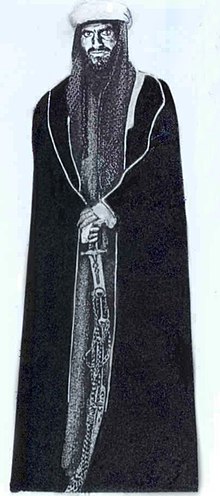
Lastly, the KSA has a praetorian guard in the form of the "National Guard" which is not at all what the name might suggest.  It is, in reality, a successor force to the infamous Inkhwan, a uniquely Wahabi kind of terror squad: very primitive, totally ruthless and utterly brainwashed.  The NG (currently 125'000 soldiers plus another 25'000 tribal thugs) is just the same Inkhwan, but with a modern polish on it, though it is still always commanded by a high ranking member of the royal family.  This force is mobile and extremely well armed (courtesy of Uncle Sam).  Interestingly, this force has no main battle tanks which, if needed, proves again that the only 'enemy' it is trained to fight (by Uncle Sam, of course) is the civilian population of the KSA.

Now consider this: if the Saudi regime throws the National Guard against the Shia of the Eastern Province then we can expect a bloodbath several orders of magnitude bigger then the relatively tame combats (so far) in Libya.  Needless to say, nobody in the Hague will investigate anything, no UNSC sanctions will be adopted, no monies abroad seized, etc.  So what will happen then?

Will it be possible for Iran to stand by while Shias are murdered by the 21-century version of the Inkhwan?  I really don't know.

Iran could very easily defeat the KSA, of course, in particular in the Shia areas of the country.  Both the Saudi military and the NG are lousy military forces, in particular compared to the Iranian military or the Pasdaran.  In case of military conflict the outcome would be preordained.  The problem is that the Saudi Shia have the bad luck of living right on top of the KSA's biggest oil reserves and there is absolutely no way, no way in hell, that the US Empire will ever allow Iran to control this territory.

In other words, the internal crisis in the KSA might well result in a US attack on Iran.

Nobody will be happier than I if one day the House of Saud falls and Shia of the KSA recover their freedom from the Wahabi crazies, but I have to point out that unlike the events in Tunisia, Egypt or Libya, a crisis in the KSA would entail a far more dangerous situation which could very rapidly become internationalized.

The Saker

PS: don't take this to the bank, but as far as I know, the favorite fetish of crazed Wahabis (Chechnia, Bosnia, Pakistan, Afghanistan, Algeria, etc.) for cutting the throats of their prisoners comes from a desire to be Ikhwan-like as the latter are the ones who started this fashion.  I am not sure about that though, nor do I know where the Ikhwan got that idea.

Does anybody know if there any Koranic or "Sunnic" (is that English?) basis for throat-cutting?

Tuesday, March 1, 2011

Saudi Arabia Deploys 30 Tanks To Bahrain


Saudi Arabia sends tanks to riot-hit Bahrain – paper

Moscow: Saudi Arabia has sent dozens of tanks to Bahrain, where anti-government protests continue for about two weeks, Egypt's Al-Masry Al-Youm newspaper said on Tuesday.

Eyewitnesses reported seeing "15 tank carriers carrying two tanks each heading towards Bahrain" along the 25-km King Fahd causeway, which links the small island nation of Bahrain to Saudi Arabia.

Protestors are mainly Shiites account for about 70% of the Bahraini population, but have long complained of discrimination and other abuses by the Sunni Khalifa dynasty that has ruled the tiny Gulf nation for more than two centuries.

In the worst unrest in the kingdom since the 1990s, a wave of protests swept across Bahrain in the past weeks. At least six people were killed and hundreds injured in clashes with police.

Opposition threatens to hold more protests and a nationwide strike if the government refuses to resign.
-------
Comment  "Wahabis are preparing to kill Shia again - what else is new?"

The Saker

Wednesday, February 23, 2011

Is Adbullah next?

Saudi Arabia's King Abdullah has announced increased benefits for his citizens (...): there will be extra funds for housing, studying abroad and social security, according to state television.
While
Saudi television reported that Bahrain's King Hamad was also flying into Riyadh on Wednesday.
It looks like even the fattest of the fat cats is now getting fearful that the revolutionary tsunami might reach him: just imagine what Abdullah is thinking while watching the developments in Libya!

Frankly, I am not sure that what happened in Egypt is really 'regime change', but what is taking place in Libya is, I think, the real thing.  The USraelian Empire had (and still has!) extremely powerful levers to influence the events in Egypt, but much less so in Libya, hence the possibly dramatically different outcome.  Either way, I am absolutely amazed, baffled and totally caught off-guard about the power and scope of the Arab revolutionary tsunami which is taking place and having seen Mubarak fall and now watching the Gaddafi regime probably collapse, I begin to wonder: could it really be that  the abominable House of Saud to finally go where it deserves to go: the trash heaps of history?

God willing!

Friday, December 18, 2009

Yemen: Pentagon's War On The Arabian Peninsula

By Rick Rozoff


Global Research, December 15, 2009

Yemen will become a battleground for a proxy war between the United States and Saudi Arabia - whose state-to-state relations are among the strongest and most durable of the entire post-World War II era - on one hand and Iran on the other.

It is perhaps impossible to determine the exact moment at which a U.S.- supported self-professed holy warrior - trained to perpetrate acts of urban terrorism and to shoot down civilian airliners - ceases to be a freedom fighter and becomes a terrorist. But a safe assumption is that it occurs when he is no longer of use to Washington. A terrorist who serves American interests is a freedom fighter; a freedom fighter who doesn't is a terrorist.

Yemenis are the latest to learn the Pentagon's and the White House's law of the jungle. Along with Iraq and Afghanistan which counterinsurgency specialist Stanley McChrystal used to perfect his techniques, Yemen is joining the ranks of other nations where the Pentagon is engaged in that variety of warfare, fraught with civilian massacres and other forms of so-called collateral damage: Colombia, Mali, Pakistan, the Philippines, Somalia and Uganda.

BBC News reported on December 14 that 70 civilians were killed when aircraft bombed a market in the village of Bani Maan in northern Yemen.

The nation's armed forces claimed responsibility for the deadly attack, but a website of the Houthi rebels against whom the bombing was ostensibly directed stated "Saudi aircraft committed a massacre against the innocent residents of Bani Maan." [1]

The Saudi regime entered the armed conflict between the (eponymous) Houthis and the Yemeni government on behalf of the latter in early November and since has been accused of launching attacks inside Yemen with tanks and warplanes. Even before the latest bombing scores of Yemenis have been killed and thousands displaced by the fighting. Saudi Arabia has also been accused of using phosphorous bombs.

Moreover, the rebel group known as Young Believers, based in the Shi'ite Muslim community of Yemen which comprises 30 percent of the country's population of 23 million, claimed on December 14 that "US fighter jets have attacked Yemen's Sa'ada Province" and "US fighter jets have launched 28 attacks on the northwestern province of Sa'ada." [2]

The previous day's edition of Britain's Daily Telegraph reported on discussions with U.S. military officials, stating "Fearful that Yemen is in danger of becoming a failed state, America has now sent a small number of special forces teams to improve training of Yemen's army in reaction to the threat."

One unnamed Pentagon official was quoted as saying "Yemen is becoming a reserve base for al-Qaeda's activities in Pakistan and Afghanistan." [3]

The conjuring up of the al-Qaeda bogey, however, is a decoy. The rebels in the north of the nation are Shi'ites and not Sunnis, much less Wahhabi Sunnis of the Saudi variety, and as such are not only not linked with any group of groups that could be categorized as al-Qaeda, but instead would be a likely target thereof.

In service to American designs in the region, the British and American press lately has been referring to Yemen as the "ancestral homeland" of Osama bin Laden. Bin Laden comes from a prominent billionaire Saudi Arabian family, of course, but as his father had been born in what is now the Republic of Yemen over a century ago the Western media are exploiting an insignificant historical accident to suggest Osama bin Laden's active role in the nation and to establish a tenuous link between the South Asian war in Afghanistan and Pakistan and Saudi and American armed intervention in a civil conflict in Yemen.

In 2002 the Pentagon dispatched an estimated 100 soldiers, by some accounts Green Beret special forces, to Yemen to train the country's military. In that instance, coming as it did two years after the suicide bombing attack against the Navy destroyer USS Cole in the southern Yemeni port of Aden, attributed to al-Qaeda, and accompanied by drone missile attacks against identified leaders of the same, Washington justified its actions as retaliation for that incident as well as the attacks in New York City and Washington, D.C. the year before.

The present context is different and a U.S.-backed counterinsurgency war in Yemen will have nothing to do with combating alleged al-Qaeda threats, but will in fact be an integral part of the strategy to expand the Afghan war into yet wider concentric circles taking in South and Central Asia, the Caucasus and the Persian Gulf, Southeast Asia and the Gulf of Aden, the Horn of Africa and the Arabian Peninsula. The eagerly awaited departure of President George W. Bush may have led to the end of the official global war on terror, now referred to as overseas contingencies operations, but nothing except the name has changed.

On December 13 the top commander of the Pentagon's Central Command in charge of the wars in Afghanistan, Iraq and Pakistan, General David Petraeus, told the Al Arabiya television network that "that U.S supports Yemen's security in the context of the military cooperation provided by America for its allies in the region" and "stressed that U.S. ships in the territorial waters of Yemen [are there] not only to control but to impede the infiltrations of weapons to Houthi rebels." [4]

To be recalled the next time the al-Qaeda/bin Laden canard is used to justify expanding U.S. military involvement on the Arabian Peninsula.

The Yemen Post of December 13 wrote that the Houthi media office "accused the U.S. of participating in the war against Houthis" and released photographs of what were identified as U.S. warplanes "involved in bombing operations in Sa'ada province [in] Northern Yemen."

The source estimated there have been twenty U.S. bombing raids coordinated with satellite surveillance. [5]

The Western press is again leading the charge in linking the Houthis, whose religious background of Zaydi Shi'ism is quite distinct from the Iranian version, to sinister machinations imputed to Tehran. Even U.S. government officials have to date acknowledged no evidence that Iran is supporting much less arming the Yemeni rebels. That will change if the script goes according to precedent as is indicated by Petraeus's comment above, and Washington will dutifully echo the Yemeni government's claim that Iran is arming its Shi'ia brethren in Yemen as it is accused of doing in Lebanon.

Yemen will become a battleground for a proxy war between the United States and Saudi Arabia - whose state-to-state relations are among the strongest and most durable of the entire post-World War II era - on one hand and Iran on the other.

In an editorial of five days ago the Tehran Times accused all parties to the Yemeni conflict - the government, the rebels and Saudi Arabia - of recklessness and issued a warning: "History provides a good example. Saudi Arabia funded extremist groups in Afghanistan and still, two decades since the withdrawal of the Soviet army from the country, the flames of war in Afghanistan are overwhelming the allies of Saudi Arabia.

"And a similar scenario is emerging in Yemen." [6]

The comparison between Yemen and Afghanistan alluded in particular to Riyadh, in the second case hand-in-glove with the United States, exporting Saudi-based Wahhabism to expand its political influence.

Saudi Arabia is attempting to promote its own version of extremism in Yemen as it did earlier in Afghanistan and Pakistan and is currently doing in Iraq. Far from the U.S. and its Western allies expressing any objection, the Saudis and their fellow Persian Gulf monarchies will be in the forefront of what is estimated to be $100 billion worth of Middle East arms purchases from the West over the next five years. "The core of this arms-buying spree will undoubtedly be the $20 billion U.S. package of weapons systems over 10 years for the six states of the Gulf Cooperation Council - Saudi Arabia, the U.A.E., Kuwait, Oman, Qatar and Bahrain." [7] Saudi Arabia is also armed with state-of-the-art British and French warplanes as well as U.S. missile defense systems.

What the earlier cited Iranian commentary warned about regarding "the flames of war" in Afghanistan is perfectly confirmed by the Commander's Initial Assessment of August 30, 2009 issued by top American and NATO military commander in Afghanistan General Stanley McChrystal and published by the Washington Post on September 21 with the redactions demanded by the Pentagon. The 66-page document served as the blueprint for President Barack Obama's December 1 announcement that 33,000 more American troops are headed to Afghanistan.

In the report McChrystal stated, "The major insurgent groups in order of their threat to the mission are: the Quetta Shura Taliban (05T), the Haqqani Network (HQN), and the Hezb-e Islami Gulbuddin (HiG)."

The last two are named after their founders and current leaders, Jalaluddin Haqqanni and Gulbuddin Hekmatyar, the Mujahideen darlings of the U.S. Central Intelligence Agency in the 1980s when the Agency's deputy director (from 1986-1989) was Robert Gates, now U.S. Secretary of Defense in charge of prosecuting the war in Afghanistan. And in Yemen.

In his 1996 book From the Shadows, Gates boasted that "CIA had important successes in covert action. Perhaps the most consequential of all was Afghanistan where CIA, with its management, funnelled billions of dollars in supplies and weapons to the mujahideen...." [8]

The New York Times in 2008 divulged these details:

"In the 1980s, Jalaluddin Haqqani was cultivated as a 'unilateral' asset of the CIA and received tens of thousands of dollars in cash for his work in fighting the Soviet Army in Afghanistan, according to an account in 'The Bin Ladens,' a recent book by Steve Coll. At that time, Haqqani helped and protected Osama bin Laden, who was building his own militia to fight the Soviet forces, Coll wrote." [9] Coll is also the author of the 2001 volume Ghost Wars: The Secret History of the CIA, Afghanistan, and Bin Laden, from the Soviet Invasion to September 10, 2001.

Haqqani's colleague Hekmatyar "received millions of dollars from the CIA through the ISI [Pakistan's Inter-Services Intelligence]. Hezb-e-Islami Gulbuddin received some of the strongest support from Pakistan and Saudi Arabia, and worked with thousands of foreign mujahideen who came to Afghanistan." [10]

This past May the (superlatively) pro-American president of Pakistan, Asif Ali Zardari, told the American NBC news network that Taliban is "part of our past and your past, and the ISI and CIA created them together....It (the Taliban) was (a) monster created by all of us...." [11]

On September 11, 2001 there were only three nations in the world that recognized Taliban rule in Afghanistan: Pakistan, Saudi Arabia and the United Arab Emirates. U.S. President George W. Bush immediately afterward singled out seven so-called states supporting terrorism for potential retaliation: Cuba, Iran, Iraq, Libya, North Korea, Sudan and Syria. Only Sudan, which expelled Osama bin Laden in 1996, had any conceivable connections to al-Qaeda. Of the nineteen accused September 11 airline hijackers, fifteen were from Saudi Arabia, two from the United Arab Emirates, one from Egypt and one from Lebanon.

Pakistan and Saudi Arabia remain highly-valued American political and military allies and the United Arab Emirates has troops serving under NATO command in Afghanistan.

It is perhaps impossible to determine the exact moment at which a U.S.-supported self-professed holy warrior - trained to perpetrate acts of urban terrorism and to shoot down civilian airliners - ceases to be a freedom fighter and becomes a terrorist. But a safe assumption is that it occurs when he is no longer of use to Washington. A terrorist who serves American interests is a freedom fighter; a freedom fighter who doesn't is a terrorist.

For decades the African National Congress of Nelson Mandela and the Palestine Liberation Organization of Yasser Arafat were at the top of the U.S. State Department's list of terrorist groups. No sooner had the Cold War ended than both Mandela and Arafat (and Sinn Fein's Gerry Adams) were invited to the White House. The first shared the Nobel Peace Prize in 1993 and the second in 1994.

If a hypothetical self-styled jihadist left Saudi Arabia or Egypt in the 1980s for Pakistan to fight against the Afghan government and its Soviet ally, he was a freedom fighter in the U.S.'s eyes. If he then went to Lebanon he was a terrorist. In the early 1990s if he arrived in Bosnia he was a freedom fighter again, but if he showed up in the Gaza Strip or the West Bank a terrorist. In the Russian North Caucasus he was a reborn freedom fighter, but if he returned to Afghanistan after 2001 a terrorist.

Depending on how the wind is blowing from Foggy Bottom, an armed Baloch separatist in Pakistan or a Kashmiri one in India is either a freedom fighter or a terrorist.

Contrariwise, in 1998 U.S. special envoy to the Balkans Robert Gelbard described the Kosovo Liberation Army (KLA) fighting the government of Yugoslavia as a terrorist organization: "I know a terrorist when I see one and these men are terrorists." [12]

The following February U.S. Secretary of State Madeleine Albright brought five members of the KLA, including its chief Hashim Thaci, to Rambouillet, France to offer an ultimatum to Yugoslavia that she knew would be rejected and lead to war. The next year she escorted Thaci on a personal tour of the United Nations Headquarters and the State Department and invited him as a guest to the Democratic Party presidential nominating convention in Los Angeles.

This November 1st Thaci, now prime minister of a pseudo-state only recognized by 63 of the world's 192 nations, hosted former U.S. President Bill Clinton for the unveiling of a statue honoring the latter's crimes. And vanity.

Washington supported armed separatists in Eritrea from the mid-1970s until 1991 in their war against the Ethiopian government.

Currently the U.S. is arming Somalia and Djibouti for war against independent Eritrea. The Pentagon has its first permanent military base in Africa in Djibouti, where it stations 2,000 troops and from where it conducts drone surveillance over Somalia. And Yemen.

In the words of Balzac's character Vautrin, "There are no such things as principles, there are only events; there are no laws, there are only circumstances...."

Yemenis are the latest to learn the Pentagon's and the White House's law of the jungle. Along with Iraq and Afghanistan which counterinsurgency specialist Stanley McChrystal used to perfect his techniques, Yemen is joining the ranks of other nations where the U.S. military is engaged in that variety of warfare, fraught with civilian massacres and other forms of so-called collateral damage: Colombia, Mali, Pakistan, the Philippines, Somalia and Uganda.


Notes

1) BBC News, December 14, 2009
2) Press TV, December 14, 2009
3) Daily Telegraph, December 13, 2009
4) Yemen Post, December 13, 2009
5) Ibid
6) Tehran Times, December 10, 2009
7) United Press International, August 25, 2009
8) BBC News, December 1, 2008
9) New York Times, September 9, 2008
10) Wikipedia
11) Press Trust of India, May 11, 2009
12) BBC News, June 28, 1998


Stop NATO
http://groups.yahoo.com/group/stopnato

Blog site:
http://rickrozoff.wordpress.com/

To subscribe, send an e-mail to:
rwrozoff@yahoo.com
or
stopnato-subscribe@yahoogroups.com

Daily digest option available.