Monday, December 20, 2010

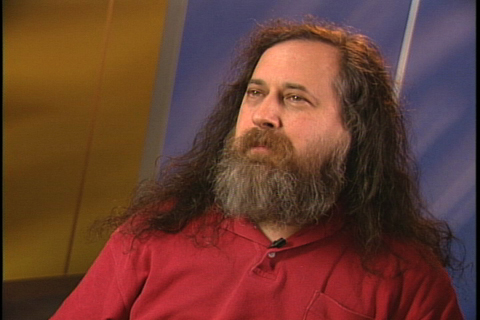
Excellent interview of Chris Hedges on Democracy Now!


Highly recommended. I consider Chris Hedges one of the most interesting US intellectuals out there (though I don't always agree with all his views).

(Make sure to click on the end of the progress bar to skip Amy's fund raising appeal)

Saturday, December 18, 2010

Wikileaks, Litvinenko and a personal note

Dear friends,

Justin Raimondo has penned a very good commentary on what Wikileaks reveals about the canard about the Russian secret service killing Litvinenko with some Polonium 210.  But I cannot publish it here lest the pretend-libertarians at Antiwar.com try to sue me for doing so.  Still, Raimondo makes so many good points that I will break my self-imposed rule and actually just point to the URL of the original article: here or here.  I always knew that the very idea of the FSB or SVR using Polonium to kill Litvinenko was absolute nonsense (ditto for the 'poisoning' of Yushchenko), but it nice quite gratifying to see that its the Brits themselves who SNAFUed it all.

On a personal note, I have just begun a new job, and an extremely stressful one at that.  I hope that things will get better with time, but right now I am either working or sitting a a near-catatonic state of exhausted stupor.  So I ask you to please forgive me if I post fewer articles or if I do not reply to your comments.  Unlike the folks are Antiwar.com, I am not a 'professional revolutionary' (to use Lenin's expression), and I don't make a single cent from this blog.  That does not mean that I don't needs these cents, however, so I need to find them elsewhere.  As I said, things should settle down in a couple of weeks or so, but until them I ask for your patience and understanding.

Kind regards,

The Saker

Friday, December 17, 2010

Kettling Wikileaks


Kettling: also known as containment or corralling - a police tactic for the management of large crowds during demonstrations or protests.

The Anonymous web protests over WikiLeaks are the internet equivalent of a mass demonstration. It's a mistake to call them hacking (playful cleverness) or cracking (security breaking). The LOIC program that is being used by the group is prepackaged so no cleverness is needed to run it, and it does not break any computer's security. The protesters have not tried to take control of Amazon's website, or extract any data from MasterCard. They enter through the site's front door, and it just can't cope with the volume.

Calling these protests DDoS, or distributed denial of service, attacks is misleading, too. A DDoS attack is done with thousands of "zombie" computers. Typically, somebody breaks the security of those computers (often with a virus) and takes remote control of them, then rigs them up as a "botnet" to do in unison whatever he directs (in this case, to overload a server). The Anonymous protesters' computers are not zombies; presumably they are being individually operated.

No – the proper comparison is with the crowds that descended last week on Topshop stores. They didn't break into the stores or take any goods from them, but they sure caused a nuisance for the owner, Philip Green. I wouldn't like it one bit if my store (supposing I had one) were the target of a large protest. Amazon and MasterCard don't like it either, and their clients were probably annoyed. Those who hoped to buy at Topshop on the day of the protest may have been annoyed too.

The internet cannot function if websites are frequently blocked by crowds, just as a city cannot function if its streets are constantly full by protesters. But before you advocate a crackdown on internet protests, consider what they are protesting: on the internet, users have no rights. As the WikiLeaks case has demonstrated, what we do online, we do on sufferance.

In the physical world, we have the right to print and sell books. Anyone trying to stop us would need to go to court. That right is weak in the UK (consider superinjunctions), but at least it exists. However, to set up a website we need the co-operation of a domain name company, an ISP, and often a hosting company, any of which can be pressured to cut us off. In the US, no law explicitly establishes this precarity. Rather, it is embodied in contracts that we have allowed those companies to establish as normal. It is as if we all lived in rented rooms and landlords could evict anyone at a moment's notice.

Reading, too, is done on sufferance. In the physical world, you can buy a book with cash, and you own it. You are free to give, lend or sell it to someone else. You are also free to keep it. However, in the virtual world, e-readers have digital handcuffs to stop you from giving, lending or selling a book, as well as licences forbidding that. Last year, Amazon used a back door in its e-reader to remotely delete thousands of copies of 1984, by George Orwell. The Ministry of Truth has been privatised.

In the physical world, we have the right to pay money and to receive money – even anonymously. On the internet, we can receive money only with the approval of organisations such as PayPal and MasterCard, and the "security state" tracks payments moment by moment. Punishment-on-accusation laws such as the Digital Economy Act extend this pattern of precarity to internet connectivity. What you do on your own computer is also controlled by others, with non-free software. Microsoft and Apple systems implement digital handcuffs – features specifically designed to restrict users. Continued use of a program or feature is precarious too: Apple put a back door in the iPhone to remotely delete installed applications and another in Windows enabled Microsoft to install software changes without asking permission.

I started the free software movement to replace user-controlling non-free software with freedom-respecting free software. With free software, we can at least control what software does in our own computers.

The US state today is a nexus of power for corporate interests. Since it must pretend to serve the people, it fears the truth may leak. Hence its parallel campaigns against WikiLeaks: to crush it through the precarity of the internet and to formally limit freedom of the press.

States seek to imprison the Anonymous protesters rather than official torturers and murderers. The day when our governments prosecute war criminals and tell us the truth, internet crowd control may be our most pressing remaining problem. I will rejoice if I see that day.

Richard Matthew Stallman is a software developer and software freedom activist. In 1983 he announced the project to develop the GNU operating system, a Unix-like operating system meant to be entirely free software, and has been the project's leader ever since. With that announcement Stallman also launched the Free Software Movement. In October 1985 he started the Free Software Foundation.

Council of Europe Adopts Kosovo Organ Trafficking Report


The human rights committee of the Council of Europe adopted Thursday a resolution requesting investigation of the traffic of drugs, weapons and human organs carried out by organizations in Kosovo under the heading of Hashim Thaci (in civilian clothes on the photo below).

Council of Europe Secretary-General Thorbjørn Jagland has called the information in the report "very serious and concerning" and has requested that the allegations not be left unanswered.

Thaci, a former Kosovar PM, who just won snap elections over the weekend, was a combat leader of the controversial KLA that fought with Serbian authorities for independence with heavy backing from Western countries, especially the USA.

Now the Council of Europe report, drafted by Swiss deputy Dick Marty, and passed by a large 2/3 majority, argues that Thaci and other Kosovar leaders organized the traffic not only of weapons and narcotic, but also of human organs, sometimes harevested from involuntary donors.

“Numerous indications seem to confirm that, during the period immediately after the end of the armed conflict, organs were removed from some prisoners at a clinic in Albanian territory, near Fushë-Kruje, to be taken abroad for transplantation," reads the report.

There has been substantial evidence that Serbians - and some Albanian Kosovars - had been secretly imprisoned by the KLA in northern Albania "and were subjected to inhuman and degrading treatment, before ultimately disappearing," the report says.

In Kosovo, the government of Thaci dismissed the report as fabrications designed to smear its leaders.

For the full text of the Marty report, read HERE.

Thursday, December 16, 2010

Wikileaks: Documents Confirm US Plans Against Venezuela

By Eva Golinger for Postcards from the Revolution

State Department documents published by Wikileaks evidence Washington's plans to "contain" Venezuela's influence in the region and increase efforts to provoke regime change

A substantial portion of the more than 1600 State Department documents Wikileaks has published during the past two weeks refer to the ongoing efforts of US diplomacy to isolate and counter the Venezuelan government.

Since Hugo Chavez won the presidency for the first time in 1998, Washington has engaged in numerous efforts to overthrow him, including a failed coup d'etat in April 2002, an oil industry strike that same year, worldwide media campaigns and varios electoral interventions. The State Department has also used its funding agencies, USAID and the National Endowment for Democracy (NED), to channel millions of dollars annually to anti-Chavez NGOs, political parties, journalists and media organizations in Venezuela, who have been working to undermine the Chavez administration and force him from power.

When these interventionist policies have been denounced by the Chavez government and others, Washington has repeatedly denied any efforts to isolate or act against the Venezuelan head of state.

Nonetheless, the State Department cables published by Wikileaks clearly evidence that not only has Washington been actively funding anti-Chavez groups in Venezuela, but it also has engaged in serious efforts during the past few years to convince governments worldwide to assume an adversarial position against President Hugo Chavez.

"CONTENTION" PLAN AGAINST A "FORMIDABLE FOE"

In a secret document authored by current Deputy Assistant Secretary of State for Western Hemisphere Affairs, Craig Kelly, and sent by the US Embassy in Santiago in June 2007 to the Secretary of State, CIA and Southern Command of the Pentagon, along with a series of other US embassies in the region, Kelly proposed "six main areas of action for the US government (USG) to limit Chavez's influence" and "reassert US leadership in the region".

Kelly, who played a primary role as "mediator" during last year's coup d'etat in Honduras against President Manuel Zelaya, classifies President Hugo Chavez as an "enemy" in his report. "Know the enemy: We have to better understand how Chavez thinks and what he intends...To effectively counter the threat he represents, we need to know better his objectives and how he intends to pursue them. This requires better intelligence in all of our countries". Further on in the memo, Kelly confesses that President Chavez is a "formidable foe", but, he adds, "he certainly can be taken".

In 2006, Washington activated a Director of National Intelligence (DNI) Mission Manager for Venezuela and Cuba. The mission, headed by clandestine CIA veteran Timothy Langford, is one of only four such intelligence entities of its type. The others were created to handle intelligence matters relating to Iran, North Korea and Afghanistan/Pakistan, evidencing the clear priority that Washington has placed on Venezuela as a target of increased espionage and covert operations.

Another suggestion made by Kelly in the secret cable, is a recommendation to increase US presence in the region and improve relations with Latin American military forces. "We should continue to strengthen ties to those military leaders in the region who share our concern over Chavez".

Kelly also proposed a "psychological operations" program against the Venezuelan government to exploit its vulnerabilities. "We also need to make sure that the truth about Chavez - his hollow vision, his empty promises, his dangerous international relationships, starting with Iran - gets out, always exercising careful judgment about where and how we take on Chavez directly/publicly".

Kelly recommended US officials make more visits to the region to "show the flag and explain directly to populations our view of democracy and progress". Kelly also offered details on how Washington could better exploit the differences amongst South American governments to isolate Venezuela:

"Brazil...can be a powerful counterpoint to Chavez's project...Chile offers another excellent alternative to Chavez...We should look to find other ways to give Chile the lead on important initiatives, but without making them look like they are our puppets or surrogates. Argentina is more complex, but still presents distinct characteristics that should inform our approach to countering Chavez's influence there".

PRESSURING MERCOSUR

Kelly also revealed the pressure Washington has been applying to Mercosur (Market of the South) to not accept Venezuela as a full member in the regional trade bloc. "With regard to Mercosur, we should not be timid in stating that Venezuela's membership will torpedo US interest in even considering direct negotiations with the trading bloc".

MEXICO, BOGOTA & OTHERS ASK TO "FIGHT" CHAVEZ

The cables published by Wikileaks not only reveal US hostility towards Venezuela, but also the requests made by regional leaders and politicians to work against President Chavez.

One secret document from October 2009 referring to a meeting between Mexican President Felipe Calderon and US Director of National Intelligence Dennis Blair tells of how Calderon confessed he was "trying to isolate Venezuela through the Rio Group". The Mexican head of state also appealed to the US intelligence chief, "The region needs a visible US presence...the United States must be ready to engage the next Brazilian president. Brazil, he said, is key to restraining Chavez...The US needs to engage Brazil more and influence its outlook".

URIBE REQUESTS "MILITARY ACTION" AGAINST CHAVEZ

In several secret documents authored by the US Embassy in Colombia, efforts by ex President of Colombia, Alvaro Uribe, to convince Washington to take action against Venezuela are evidenced.

In one cable from December 2007, the US Ambassador in Colombia recounts a meeting between Uribe and a delegation of US congress members, including Senate Majority Leader, Harry Reid. According to the text, Uribe "likened the threat Chavez poses to Latin America to that posed by Hitler in Europe".

And in yet another report summarizing a January 2008 meeting between Uribe and the Head of the Joint Chiefs of Staff, Admiral Michael Mullen, Uribe is quoted as recommending military action against Venezuela.

"The best counter to Chavez, in Uribe's view, remains action - including use of the military".

Later in that same secret cable, Uribe urged Washington to "lead a public campaign against Venezuela...to counter Chavez..."

OPPOSITION BISHOP REQUESTS US ACTION

In addition to regional politicians and US diplomats urging plans against President Chavez, one cable reveals how during a meeting between a Venezuelan Archbishop and the US Ambassador, the religious leader asked for Washington to act against his own government. At the meeting, which took place in January 2005 according to the document, Archbishop Baltazar Porras told Ambassador William Brownfield that the "US government should be more clear and public in its criticism of the Chavez administration" and that the "international community also needs to work and speak out more to contain Chavez..."

The plans and strategies revealed through these official documents confirm what other evidence has already corroborated regarding Washington's increase in aggression towards Venezuela. The US continues to fund opposition groups that act to undermine Venezuelan democracy while escalating its hostile discourse and policies against the Chavez government.

This week's Senate affirmation of Larry Palmer as Ambassador to Venezuela will only make matters worse. Palmer was rejected by the Venezuelan government after he made negative statements about the Chavez administration in August. Washington's insistence of sending Palmer appears to be an effort to provoke a rupture in diplomatic relations.

Wednesday, December 15, 2010

Capitalism's underlying slave labor requirement explained

Jews, Judaism & Jewishness

by Gilad Atzmon

Since Israel defines itself as the ‘Jewish state’ we are entitled to consider what the word ‘Jewish’ stands for.

I tend to differentiate between three distinct (yet occasionally confusing) categories.

  1. Jews - the people
  2. Judaism - the religion
  3. Jewishness - the ideology

During my study of Zionism, Jewish politics, 'identity politics' and culture, I have managed to avoid embroiling myself in the complexity involved with the first category -- I do not deal with Jews as a race or an ethnicity. I also generally avoid dealing with Judaism (the religion). In fact, I am the first to admit that the only Jewish collective to support the Palestinians, are groups that exist within the Torah Jews. That such groups support Palestinian self-determination and autonomy is proof enough that aspects of religious Judaism can be interpreted as emphasising ethical precepts.

However -- I am very critical of what I view as 'Jewish ideology, and I am also critical of what I consider to be 'Jewish identity politics.'

'Jewish ideology' is basically an amalgam of racially orientated exclusive arguments. It is fuelled by assumptions about 'ethno'-centric supremacy, and ideas such as ‘choseness’. Being a tribal setting then, Jewish ideology defies equality. It also opposes universalism. The followers of that ideology tend to believe that they are somewhat different and even better (chosen) than non Jews. And much Jewish political activity is a formulation, and expression of a tribal exclusive club that demands a ‘Jews only’ entry card.

It is important to note that Jewish ideology and Zionism are not entirely the same -- In fact, Zionism should be seen as just one manifestation of Jewish ideology. Though Israel is the fruit of the Zionist project -- it is vital to realise that Zionism does not drive Israeli politics or ideology. In fact, Zionism is largely a Diaspora Jewish discourse.

While early Zionism presented itself as a promise to ‘resolve the Galut’ (Diaspora) by ‘transforming’ the Diaspora Jew into an ‘authentic civilised’ human being -- it is important to remember that the last few generations of Israelis have been born in Zion (Palestine) and are, therefore, not entirely shaped by Zionist ideologies. From a Zionist perspective, the modern Israeli is then, a ‘post-revolutionary’ subject. And indeed, I myself, amongst millions of other Israelis, joined the Israeli army because we were Jews -- not because we were Zionists.

Israelis do, however, follow what I define as Jewish ideology -- They practise and perform a number of different measures that are there to maintain Jewish exclusivity on the land. When 94% of Israeli Jews supported IDF's murderous tactics against Gazans at the time of Operation Cast Lead, it wasn’t Zionism that motivated them. It was the total lack of empathy with other human beings. It was blindness towards others. It was supremacy and chauvinism; or, in other words, it was the ugliest homicidal manifestation of their choseness.

Almost every aspect of Israeli politics, whether it is the ‘unilateral disengagement’ or the loyalty oath, can be grasped as an attempt to project and protect Jewish exclusivity on the land (instead of trying to resolve the Galut)

You may note that I neither refer to Jews as a racial or ethnic group; nor am I directing my critique towards Judaism, the religion. And whilst Jews can indeed succumb to what I define as 'Jewish ideology', (and many of them do) it is valuable to bear in mind they can also be its most virulent enemies: Obvious examples are Jesus, Spinoza and Marx, and one can also include Israelis such as Israel Shahak, Gideon Levy and others. It is also pertinent to mention that some early Zionists such as Nordau and Borochov were also strong opponents of Jewish ideology and culture -- For them, Zionism was a necessary attempt to amend Jews. They believed that once dwelling on ‘their promised land,’ what had hitherto been perceived as 'Jewish tendencies', (such as 'non-productive inclinations'), would disappear.

It should be obvious that I am in total support of the universal and ethical ideas that are coupled with the ODS (One Democratic State) and SOIC (State of its Citizens). I would be also be the first to endorse and explore any form of reconciliation between the indigenous people of the land (Palestinians) and the new comers (Israelis).

Yet, I believe that for any possible and intelligible discussion to take place --we surely must be able to freely explore the true nature of the ideology that drives the Jewish state, and Jewish politics around the world.

We must find a way to admit to ourselves that the Jewish ideological, political and cultural discourse is a tribal discourse: it is foreign to universalism and ideas of true equality. Also, we need to realise that the Israeli notion of ‘shalom’ (peace) is interpreted by Israelis as ‘security for Jews’ instead of reconciliation.

Unless we are brave enough to confront these issues, and discuss them freely, the pro- Palestinian movement is trapped in a futile discourse on the verge of self-indulgence.

Do we know "who is behind Wikileaks"?

I am getting emails from readers on an almost daily basis now, pointing me to the article by by Michel Chossudovsky "Who is Behind Wikileaks?"  This is a very good article indeed, and I highly recommend its reading.  But please, let me point out the key segment of this article (emphasis added):

In the case of Wikileaks, the facts are contained in a data bank; many of those facts, particularly those pertaining to foreign governments serve US foreign policy interests. Other facts tend, on the other hand to discredit the US administration. With regard to financial information, the release of data pertaining to a particular bank instigated via Wikileaks by a rival financial institution, could potentially be used to trigger the collapse or bankrutpcy of the targeted financial institution.  All the Wiki-facts are selectively redacted, they are then "analyzed" and interpreted by a media which serves the economic elites. While the numerous pieces of information contained in the Wikileaks data bank are accessible, the broader public will not normally take the trouble to consult and scan through the Wikileaks data bank. The public will read the redacted selections and interpretations presented in major news outlets.  A partial and biased picture is presented. The redacted version is accepted by public opinion because it is based on what is heralded as a "reliable source", when in fact what is presented in the pages of major newspapers and on network TV is a carefully crafted and convoluted distortion of the truth. 

Ok.  So what does Chossudovsky say?

1. The data dump itself is real
2. The corporate media selectively uses it
3. The general public only sees what the corporate media gives it

I agree with all of the above.  But notice that none of that says anything about some mysterious "who" who is "behind" Wikileaks.  None of that makes any claims about Assange himself.  In fact, Chossudovsky ends his article with the words: we should also stand firm in preventing the prosecution of Julian Assange in the US.

Many readers are pointing out that Assange is a self-enamored character who likes to ridicule the 9-11 Truth movement.  That is possibly quite true, but that is also highly irrelevant.  These are most definitely not the reasons why folks like Ron Paul, Vladimir Putin, Luiz Inacio Lula da Silva, or Evo Morales are expressing their support for him.  Nor I these the reasons why Mahmoud Ahmadinejad decries the leaks as 'US propaganda'.

And I would like to lay to rest once and for all (hopefully!) two of the worst of all arguments of the Wiki-doubters: that a) the leaks are parroting the Zionist propaganda lies and b) that they don't contain anything really 'hot'.

The first one is a no-brainer: these leaks come from the SIPRNet, that is a *low* level classified network.  Yes, information like 'confidential' and 'secret' is in reality of *low* level.  In fact, 2,5-3 million people have access to this network.  Now ask yourself a simple question: you are a US government employee with a security clearance, and you are about to contribute an entry to a network which is read by millions of other US government employees, including your bosses.  Do you really want to criticize Israel in any way?  Do you even want to disagree with the Zionist propaganda line?  Of course not!  That would be a career ending mistake.

The second argument is only made by those who never had a security clearance.  Anybody with real access to highly classified documents will tell you that 'confidential' and 'secret' are really riff-raff, stuff which really could be classified as 'for official use only', but which gets the higher level to avoid embarrassment.  This is also why the leaks have mostly only caused embarrassment to Uncle Sam: because by definition anything 'hotter' would be classified much higher and restricted to a dramatically lower number of people, only on a need to know basis.  Think about it - stuff given out to several million folks is, by definition, not a 'need to know' and therefore it cannot be truly 'hot'.

As somebody how did have a high level security clearance in the past, I can assure you that these leaks look *exactly* like the kind of mildly classified chatter which you would expect on this level of classification.

Back to the original argument now.  Point one: there is absolutely no reason to doubt that the person who is behind the data dump to Wikileaks is Bradley Manning or somebody else from the several million of people who had access to SIPRNet.  Point two: all Assange and Wikileaks did is manage the modalities of release of this data dump.  I personally think that they did not do a very good job of it (I would have dumped the full thing in one batch), but there is no reason to suspect that Assange or his friends are puppets of some kind of shadowy intelligence agency.  Point three: Assange himself, his character and his views simply do not matter and saying that there is no reason to suspect Assange is not some plant does not entail endorsing his personality, his views or, in fact, his use (or not) of condoms.  Point four: the same goes for Wikileaks as an organization which matters only to the degree that it is a conduit for the release of the information contained in the data dump.  As I said, I am less then thrilled by how they are doing it all, but the fact that I would have chosen a different strategy does not mean that they are all Mossad agents.

The really bad thing in this entire debate about who or what is behind Wikileaks is that it obfuscates the real issue, and that issue is real: the US government is using all its powers to censor the Internet and, so far, it has had an appalling degree of success.  Worse, it is quite clear that Bradely Manning's basic human rights are being horribly violated and there is a non-trivial possibility that the same might happen to Julian Assange should he be extradited to the 'Imperial Homeland'.

Folks like the EFF or Ron Paul get it right: the real issue here is the nature of the US government and the freedom of the Internet.  The rest is, frankly, counter productive distraction.

YMMV, of course.

The Saker

The inhumane conditions of Bradley Manning's detention

By Glenn Greenwald for Salon.com

Bradley Manning, the 22-year-old U.S. Army Private accused of leaking classified documents to WikiLeaks, has never been convicted of that crime, nor of any other crime. Despite that, he has been detained at the U.S. Marine brig in Quantico, Virginia for five months -- and for two months before that in a military jail in Kuwait -- under conditions that constitute cruel and inhumane treatment and, by the standards of many nations, even torture. Interviews with several people directly familiar with the conditions of Manning's detention, ultimately including a Quantico brig official (Lt. Brian Villiard) who confirmed much of what they conveyed, establishes that the accused leaker is subjected to detention conditions likely to create long-term psychological injuries.

Since his arrest in May, Manning has been a model detainee, without any episodes of violence or disciplinary problems. He nonetheless was declared from the start to be a "Maximum Custody Detainee," the highest and most repressive level of military detention, which then became the basis for the series of inhumane measures imposed on him.

From the beginning of his detention, Manning has been held in intensive solitary confinement. For 23 out of 24 hours every day -- for seven straight months and counting -- he sits completely alone in his cell. Even inside his cell, his activities are heavily restricted; he's barred even from exercising and is under constant surveillance to enforce those restrictions. For reasons that appear completely punitive, he's being denied many of the most basic attributes of civilized imprisonment, including even a pillow or sheets for his bed (he is not and never has been on suicide watch). For the one hour per day when he is freed from this isolation, he is barred from accessing any news or current events programs. Lt. Villiard protested that the conditions are not "like jail movies where someone gets thrown into the hole," but confirmed that he is in solitary confinement, entirely alone in his cell except for the one hour per day he is taken out.

In sum, Manning has been subjected for many months without pause to inhumane, personality-erasing, soul-destroying, insanity-inducing conditions of isolation similar to those perfected at America's Supermax prison in Florence, Colorado: all without so much as having been convicted of anything. And as is true of many prisoners subjected to warped treatment of this sort, the brig's medical personnel now administer regular doses of anti-depressants to Manning to prevent his brain from snapping from the effects of this isolation.

Just by itself, the type of prolonged solitary confinement to which Manning has been subjected for many months is widely viewed around the world as highly injurious, inhumane, punitive, and arguably even a form of torture. In his widely praised March, 2009 New Yorker article -- entitled "Is Long-Term Solitary Confinement Torture?" -- the surgeon and journalist Atul Gawande assembled expert opinion and personal anecdotes to demonstrate that, as he put it, "all human beings experience isolation as torture." By itself, prolonged solitary confinement routinely destroys a person’s mind and drives them into insanity. A March, 2010 article in The Journal of the American Academy of Psychiatry and the Law explains that "solitary confinement is recognized as difficult to withstand; indeed, psychological stressors such as isolation can be as clinically distressing as physical torture."

For that reason, many Western nations -- and even some non-Western nations notorious for human rights abuses -- refuse to employ prolonged solitary confinement except in the most extreme cases of prisoner violence. "It’s an awful thing, solitary," John McCain wrote of his experience in isolated confinement in Vietnam. “It crushes your spirit." As Gawande documented: "A U.S. military study of almost a hundred and fifty naval aviators returned from imprisonment in Vietnam . . . reported that they found social isolation to be as torturous and agonizing as any physical abuse they suffered." Gawande explained that America’s application of this form of torture to its own citizens is what spawned the torture regime which President Obama vowed to end:

This past year, both the Republican and the Democratic Presidential candidates came out firmly for banning torture and closing the facility in Guantánamo Bay, where hundreds of prisoners have been held in years-long isolation. Neither Barack Obama nor John McCain, however, addressed the question of whether prolonged solitary confinement is torture. . . .

This is the dark side of American exceptionalism. . . . Our willingness to discard these standards for American prisoners made it easy to discard the Geneva Conventions prohibiting similar treatment of foreign prisoners of war, to the detriment of America’s moral stature in the world. In much the same way that a previous generation of Americans countenanced legalized segregation, ours has countenanced legalized torture. And there is no clearer manifestation of this than our routine use of solitary confinement . . . .

It's one thing to impose such punitive, barbaric measures on convicts who have proven to be violent when around other prisoners; at the Supermax in Florence, inmates convicted of the most heinous crimes and who pose a threat to prison order and the safety of others are subjected to worse treatment than what Manning experiences. But it's another thing entirely to impose such conditions on individuals, like Manning, who have been convicted of nothing and have never demonstrated an iota of physical threat or disorder.

In 2006, a bipartisan National Commission on America's Prisons was created and it called for the elimination of prolonged solitary confinement. Its Report documented that conditions whereby "prisoners end up locked in their cells 23 hours a day, every day. . . is so severe that people end up completely isolated, living in what can only be described as torturous conditions." The Report documented numerous psychiatric studies of individuals held in prolonged isolation which demonstrate "a constellation of symptoms that includes overwhelming anxiety, confusion and hallucination, and sudden violent and self-destructive outbursts." The above-referenced article from the Journal of the American Academy of Psychiatry and the Law states: "Psychological effects can include anxiety, depression, anger, cognitive disturbances, perceptual distortions, obsessive thoughts, paranoia, and psychosis."

When one exacerbates the harms of prolonged isolation with the other deprivations to which Manning is being subjected, long-term psychiatric and even physical impairment is likely. Gawande documents that "EEG studies going back to the nineteen-sixties have shown diffuse slowing of brain waves in prisoners after a week or more of solitary confinement." Medical tests conducted in 1992 on Yugoslavian prisoners subjected to an average of six months of isolation -- roughly the amount to which Manning has now been subjected -- "revealed brain abnormalities months afterward; the most severe were found in prisoners who had endured either head trauma sufficient to render them unconscious or, yes, solitary confinement. Without sustained social interaction, the human brain may become as impaired as one that has incurred a traumatic injury." Gawande's article is filled with horrifying stories of individuals subjected to isolation similar to or even less enduring than Manning's who have succumbed to extreme long-term psychological breakdown.

Manning is barred from communicating with any reporters, even indirectly, so nothing he has said can be quoted here. But David House, a 23-year-old MIT researcher who befriended Manning after his detention (and then had his laptops, camera and cellphone seized by Homeland Security when entering the U.S.) is one of the few people to have visited Manning several times at Quantico. He describes palpable changes in Manning's physical appearance and behavior just over the course of the several months that he's been visiting him. Like most individuals held in severe isolation, Manning sleeps much of the day, is particularly frustrated by the petty, vindictive denial of a pillow or sheets, and suffers from less and less outdoor time as part of his one-hour daily removal from his cage.

This is why the conditions under which Manning is being detained were once recognized in the U.S. -- and are still recognized in many Western nations -- as not only cruel and inhumane, but torture. More than a century ago, U.S. courts understood that solitary confinement was a barbaric punishment that severely harmed the mental and physical health of those subjected to it. The Supreme Court's 1890 decision in In re Medley noted that as a result of solitary confinement as practiced in the early days of the United States, many "prisoners fell, after even a short confinement, into a semi-fatuous condition . . . and others became violently insane; others still, committed suicide; while those who stood the ordeal better . . . [often] did not recover sufficient mental activity to be of any subsequent service to the community." And in its 1940 decision in Chambers v. Florida, the Court characterized prolonged solitary confinement as "torture" and compared it to "[t]he rack, the thumbscrew, [and] the wheel."

The inhumane treatment of Manning may have international implications as well. There are multiple proceedings now pending in the European Union Human Rights Court, brought by "War on Terror" detainees contesting their extradition to the U.S. on the ground that the conditions under which they likely will be held -- particularly prolonged solitary confinement -- violate the European Convention on Human Rights, which (along with the Convention Against Torture) bars EU states from extraditing anyone to any nation where there is a real risk of inhumane and degrading treatment. The European Court of Human Rights has in the past found detention conditions violative of those rights (in Bulgaria) where "the [detainee] spent 23 hours a day alone in his cell; had limited interaction with other prisoners; and was only allowed two visits per month." From the Journal article referenced above:

International treaty bodies and human rights experts, including the Human Rights Committee, the Committee against Torture, and the U.N. Special Rapporteur on Torture, have concluded that solitary confinement may amount to cruel, inhuman, or degrading treatment in violation of the International Covenant on Civil and Political Rights and the Convention against Torture and other Cruel, Inhuman, and Degrading Treatment or Punishment. They have specifically criticized supermax confinement in the United States because of the mental suffering it inflicts.

Subjecting a detainee like Manning to this level of prolonged cruel and inhumane detention can thus jeopardize the ability of the U.S. to secure extradition for other prisoners, as these conditions are viewed in much of the civilized world as barbaric. Moreover, because Manning holds dual American and U.K. citizenship (his mother is British), it is possible for British agencies and human rights organizations to assert his consular rights against these oppressive conditions. At least some preliminary efforts are underway in Britain to explore that mechanism as a means of securing more humane treatment for Manning. Whatever else is true, all of this illustrates what a profound departure from international norms is the treatment to which the U.S. Government is subjecting him.

* * * * *

The plight of Manning has largely been overshadowed by the intense media fixation on WikiLeaks, so it's worth underscoring what it is that he's accused of doing and what he said in his own reputed words about these acts. If one believes the authenticity of the highly edited chat logs of Manning's online conversations with Adrian Lamo that have been released by Wired (that magazine inexcusably continues to conceal large portions of those logs), Manning clearly believed that he was a whistle-blower acting with the noblest of motives, and probably was exactly that. If, for instance, he really is the leaker of the Apache helicopter attack video -- a video which sparked very rare and much-needed realization about the visceral truth of what American wars actually entail -- as well as the war and diplomatic cables revealing substantial government deceit, brutality, illegality and corruption, then he's quite similar to Daniel Ellsberg. Indeed, Ellsberg himself said the very same thing about Manning in June on Democracy Now in explaining why he considers the Army Private to be a "hero":

The fact is that what Lamo reports Manning is saying has a very familiar and persuasive ring to me. He reports Manning as having said that what he had read and what he was passing on were horrible -- evidence of horrible machinations by the US backdoor dealings throughout the Middle East and, in many cases, as he put it, almost crimes. And let me guess that -- he’s not a lawyer, but I'll guess that what looked to him like crimes are crimes, that he was putting out. We know that he put out, or at least it's very plausible that he put out, the videos that he claimed to Lamo. And that's enough to go on to get them interested in pursuing both him and the other.

And so, what it comes down, to me, is -- and I say throwing caution to the winds here -- is that what I've heard so far of Assange and Manning -- and I haven't met either of them -- is that they are two new heroes of mine.

To see why that's so, just recall some of what Manning purportedly said about why he chose to leak, at least as reflected in the edited chat logs published by Wired:

Lamo: what's your endgame plan, then?. . .

Manning: well, it was forwarded to [WikiLeaks] - and god knows what happens now - hopefully worldwide discussion, debates, and reforms - if not, than [sic] we're doomed - as a species - i will officially give up on the society we have if nothing happens - the reaction to the video gave me immense hope; CNN's iReport was overwhelmed; Twitter exploded - people who saw, knew there was something wrong . . . Washington Post sat on the video… David Finkel acquired a copy while embedded out here. . . . - i want people to see the truth… regardless of who they are… because without information, you cannot make informed decisions as a public.

if i knew then, what i knew now - kind of thing, or maybe im just young, naive, and stupid . . . im hoping for the former - it cant be the latter - because if it is… were fucking screwed (as a society) - and i dont want to believe that we’re screwed.

Manning described the incident which first made him seriously question the U.S. Government: when he was instructed to work on the case of Iraqi "insurgents" who had been detained for distributing so-called "insurgent" literature which, when Manning had it translated, turned out to be nothing more than "a scholarly critique against PM Maliki":

i had an interpreter read it for me… and when i found out that it was a benign political critique titled "Where did the money go?" and following the corruption trail within the PM’s cabinet… i immediately took that information and *ran* to the officer to explain what was going on… he didn’t want to hear any of it… he told me to shut up and explain how we could assist the FPs in finding *MORE* detainees…

i had always questioned the things worked, and investigated to find the truth… but that was a point where i was a *part* of something… i was actively involved in something that i was completely against

And Manning explained why he never considered the thought of selling this classified information to a foreign nation for substantial profit or even just secretly transmitting it to foreign powers, as he easily could have done:

Manning: i mean what if i were someone more malicious- i could've sold to russia or china, and made bank?

Lamo: why didn’t you?

Manning: because it's public data

Lamo: i mean, the cables

Manning: it belongs in the public domain -information should be free - it belongs in the public domain - because another state would just take advantage of the information… try and get some edge - if its out in the open… it should be a public good.

That's a whistleblower in the purest and most noble form: discovering government secrets of criminal and corrupt acts and then publicizing them to the world not for profit, not to give other nations an edge, but to trigger "worldwide discussion, debates, and reforms." Given how much Manning has been demonized -- at the same time that he's been rendered silent by the ban on his communication with any media -- it's worthwhile to keep all of that in mind.

But ultimately, what one thinks of Manning's alleged acts is irrelevant to the issue here. The U.S. ought at least to abide by minimal standards of humane treatment in how it detains him. That's true for every prisoner, at all times. But departures from such standards are particularly egregious where, as here, the detainee has merely been accused, but never convicted, of wrongdoing. These inhumane conditions make a mockery of Barack Obama's repeated pledge to end detainee abuse and torture, as prolonged isolation -- exacerbated by these other deprivations -- is at least as damaging, as violative of international legal standards, and almost as reviled around the world, as the waterboard, hypothermia and other Bush-era tactics that caused so much controversy.

What all of this achieves is clear. Having it known that the U.S. could and would disappear people at will to "black sites," assassinate them with unseen drones, imprison them for years without a shred of due process even while knowing they were innocent, torture them mercilessly, and in general acts as a lawless and rogue imperial power created a climate of severe intimidation and fear. Who would want to challenge the U.S. Government in any way -- even in legitimate ways -- knowing that it could and would engage in such lawless, violent conduct without any restraints or repercussions?

That is plainly what is going on here. Anyone remotely affiliated with WikiLeaks, including American citizens (and plenty of other government critics), has their property seized and communications stored at the border without so much as a warrant. Julian Assange -- despite never having been charged with, let alone convicted of, any crime -- has now spent more than a week in solitary confinement with severe restrictions under what his lawyer calls "Dickensian conditions." But Bradley Manning has suffered much worse, and not for a week, but for seven months, with no end in sight. If you became aware of secret information revealing serious wrongdoing, deceit and/or criminality on the part of the U.S. Government, would you -- knowing that you could and likely would be imprisoned under these kinds of repressive, torturous conditions for months on end without so much as a trial: just locked away by yourself 23 hours a day without recourse -- be willing to expose it? That's the climate of fear and intimidation which these inhumane detention conditions are intended to create.

* * * * *

Those wishing to contribute to Bradley Manning's defense fund can do so here. All of those means are reputable, but everyone should carefully read the various options presented in order to decide which one seems best.

UPDATE: I was contacted by Lt. Villiard, who claims there is one factual inaccuracy in what I wrote: specifically, he claims that Manning is not restricted from accessing news or current events during the proscribed time he is permitted to watch television. That is squarely inconsistent with reports from those with first-hand knowledge of Manning's detention, but it's a fairly minor dispute in the scheme of things.

Monday, December 13, 2010

Two important articles by the EFF about the Internet freedom in the Wikileaks context


by Kevin Bankston

When it comes to Wikileaks, there's a lot of fear out there on the Internet right now.

Between the federal criminal investigation into Wikileaks, Senator Joe Lieberman's calls for companies to stop providing support for Wikileaks and his suggestion that the New York Times itself should be criminally investigated, Senator Dianne Feinstein's recent Wall Street Journal op-ed calling for prosecution of Wikileaks founder Julian Assange, and even the suggestion by some that he should be assassinated, a lot of people are scared and confused.

Will I break the law if I host or mirror the US diplomatic cables that have been published by Wikileaks? If I view or download them? If I write a news story based on them? These are just a few of the questions we've been getting here at EFF, particularly in light of many US companies' apparent fear to do any business with Wikileaks (with a few notable exceptions).

We unfortunately don't have the capacity to offer individualized legal advice to everyone who contacts us. What we can do, however, is talk about EFF's own policy position: we agree with other legal commentators who have warned that a prosecution of Assange, much less of other readers or publishers of the cables, would face serious First Amendment hurdles ([1], [2]) and would be "extremely dangerous" to free speech rights. Along with our friends at the ACLU, "We're deeply skeptical that prosecuting WikiLeaks would be constitutional, or a good idea."

Even better than commentary, we can also provide legal information on this complicated issue, and today we have for you some high quality legal information from an expert and objective source: Congress' own research service, CRS. The job of this non-partisan legal office is to provide objective, balanced memos to Congress on important legal issues, free from the often hysteric hyperbole of other government officials. And thanks to Secrecy News, we have a copy of CRS' latest memo on the Wikileaks controversy, a report entitled "Criminal Prohibitions on the Publication of Classified Defense Information" and dated this Monday, December 6.

Like this blog post itself, the CRS memo isn't legal advice. But it is a comprehensive discussion of the laws under which the Wikileaks publishers — or anyone else who obtains or publishes the documents, be it you or the New York Times — might be prosecuted and the First Amendment problems that such a prosecution would likely raise. Notably, the fine lawyers at CRS recognize a simple fact that statements from Attorney General Eric Holder, the Senators, the State Department and others have glossed over: a prosecution against someone who isn't subject to the secrecy obligations of a federal employee or contractor, based only on that person's publication of classified information that was received innocently, would be absolutely unprecedented and would likely pose serious First Amendment problems. As the summary page of the 21-page memo succinctly states,

This report identifies some criminal statutes that may apply [to dissemination of classified documents], but notes that these have been used almost exclusively to prosecute individuals with access to classified information (and a corresponding obligation to protect it) who make it available to foreign agents, or to foreign agents who obtain classified information unlawfully while present in the United States. Leaks of classified information to the press have only rarely been punished as crimes, and we are aware of no case in which a publisher of information obtained through unauthorized disclosure by a government employee has been prosecuted for publishing it. There may be First Amendment implications that would make such a prosecution difficult, not to mention political ramifications based on concerns about government censorship.

The report proceeds to discuss the Espionage Act of 1917 and a number of other potentially applicable statutes, followed by an extended discussion (at pp. 14-20) of how the Supreme Court's First Amendment decisions — and in particular the Pentagon Papers case — could complicate such a prosecution. For anyone interested in or concerned about the legality of publishing the Wikileaks documents and the legal and political challenges to a successful prosecution, this CRS memo is an absolute must-read.

Hopefully, this information will help counter much of the fear that our government's so-called "war" against Wikileaks has generated. Meanwhile, we will continue our effort to oppose online censorship and provide additional news and commentary on the ongoing WikiLeaks saga, which is shaping up to be the first great free speech battle of the 21st century. We hope you'll join us in the fight.

Amazon and WikiLeaks - Online Speech is Only as Strong as the Weakest Intermediary

Co-authored by Rainey Reitman and Marcia Hofmann

The First Amendment to the Constitution guarantees freedom of expression against government encroachment — but that doesn't help if the censorship doesn't come from the government.

The controversial whistle-blower website WikiLeaks, which has begun to publish a trove of over 250,000 classified diplomatic cables, found itself kicked off of Amazon's servers earlier this week. WikiLeaks had apparently moved from a hosting platform in Sweden to the cloud hosting services available through Amazon in an attempt to ward off ongoing distributed denial of service attacks.

According to Amazon, WikiLeaks violated the site's terms of service, resulting in Amazon pulling the plug on hosting services. However, news sources have also reported that Amazon cut off WikiLeaks after being questioned by members of the staff of Senate Homeland Security Committee Chairman Joe Lieberman. While it's impossible to know whether or not Amazon's decision was directly caused by the call from the senator's office, we do know that Lieberman has proposed "anti-WikiLeaks legislation" and that he has a history of pushing for online censorship in the name of "security."

Importantly, the government itself can't take official action to silence WikiLeaks' ongoing publications — that would be an unconstitutional prior restraint, or censorship of speech before it can be communicated to the public. No government actor can nix WikiLeaks' right to publish content any more than the government could stop the New York Times and Washington Post from publishing the Pentagon Papers, which were also stolen secret government documents.

But a web hosting company isn't the government. It's a private actor and it certainly can choose what to publish and what not to publish. Indeed, Amazon has its own First Amendment right to do so. That makes it all the more unfortunate that Amazon caved to unofficial government pressure to squelch core political speech. Amazon had an opportunity to stand up for its customer's right to free expression. Instead, Amazon ran away with its tail between its legs.

In the end, it's not just WikiLeaks that suffers from corporate policies that suppress free speech, here on matters of intense public importance. It's also readers, who lose out on their First Amendment right to read the information WikiLeaks publishes. And it's also the other Internet speakers who can't confidently sign up for Amazon's hosting services without knowing that the company has a history of bowing to pressure to remove unpopular content.

Today Amazon sells many things, but its roots are in books, which historically have been a lightning rod for political censorship campaigns. These campaigns tried and failed to suppress Allen Ginsberg's Howl, Nabokov's Lolita, and even Orwell's 1984. And it's the book industry — including writers, publishers, booksellers and libraries — that has championed the rights of readers and helped America maintain a proud history of free speech in the written word, even when faced with physical danger.

While it's frustrating to think of any hosting provider cutting services to a website because it considers the content too politically volatile or controversial, it's especially disheartening to see Amazon knuckle under to pressure from a single senator. Other Internet intermediaries should now expect to receive a phone call when some other member of Congress is unhappy with speech they are hosting. After all, it worked on Amazon.

Analysis: Russia Moves To Counter NATO


Many people wouldn't know that former United States president Ronald Reagan's signature phrase "trust, but verify" is actually the translation of a Russian proverb - doveryai, no proveryai. Two decades into the post-Cold War era, Moscow wants to reclaim the self-contradictory phrase from the American repertoire and apply it to Russia's "reset" of ties with the United States.

The shellacking that US President Barack Obama received in the mid-term elections to congress, WikiLeaks disclosures about the North Atlantic Treaty Organization (NATO) plans to defend against "possible Russian aggression", the announcement of the US decision to deploy an air force detachment at Lask Air Base in Poland, the belligerent speech last week by Senator John McCain calling into question the entire philosophy behind the reset with Russia - these have created a sense of disquiet in Moscow.

Unsurprisingly, the message that comes out of the summit meeting of the Collective Security Treaty Organization (CSTO) in Moscow on Saturday is that Moscow wants its own alliance to be further strengthened as a "key element in ensuring the security in the post-Soviet space" and its image to be enhanced globally. CSTO comprises Armenia, Belarus, Kazakhstan, Kyrgyzstan, Russia, Tajikistan and Uzbekistan.

The mid-term elections in the US would leave Russia, like many other countries, wondering whether pinning hopes on Obama's capacity to deliver on the "reset" isn't, in fact, supposing a lot. McCain's speech at the Johns Hopkins School of Advanced International Studies last Friday signals that the reset is most certainly going to run into stiff opposition from the Republican-dominated congress.

McCain questioned the very need of reset when "Russia is becoming less and less capable of being a global, great power partner with the US"; when American and Russian interests mostly diverge; when they don't have any shared values; when the Russian political system is "unresponsive and predatory" presided over by a "quasi-criminal ruling syndicate" that "steals from, lies to, and assaults its own citizens with virtual immunity".

Citing continuing disagreements with Russia on missile defenses in Europe, Russia's overwhelming superiority in tactical nuclear weapons and differing approaches to open energy markets, McCain called on the Obama administration to be "more assertive in the defense of our interests and values" and to link Russia's admission to the World Trade Organization with its adherence to the rule of law.

The contrived bonhomie at the NATO summit in Lisbon last month has all but dissipated. Meanwhile, the WikiLeaks disclosures put a question mark on NATO's sincerity in a "reset" with Russia. According to US diplomatic cables, NATO drew up plans in January to defend the Baltic states against possible Russian military aggression and Secretary of State Hillary Clinton wanted that the plans be kept secret from Moscow.

Moscow says these plans were approved at the Lisbon summit even as the alliance declared that it sought a "true strategic partnership" with Russia based on shared security interests and the need to address "common challenges, jointly identified".

Moscow is annoyed. Foreign Minister Sergei Lavrov said, "With one hand NATO... negotiated with us some important documents that were aimed at a joint partnership, and with the other hand took behind our backs decisions about the need for defense against us... We have posed these questions and we expect to get answers. I presume we have the right to do so."

Equally, following talks in Washington on Wednesday between Obama and visiting Polish President Bronislaw Komorowski, the two countries announced an enhancement of their defense ties in the spirit of the 2008 US-Polish Declaration on Strategic Cooperation, which includes cooperation between the two air forces and the establishment of a US air detachment in Poland.

The Russian Foreign Ministry reacted, linking the US-Polish decision with the WikiLeaks disclosure and the deployment in 2009 of Patriot air defense systems in Poland, "The true purpose of which also raises questions." Ironically, Komorowski hosted Medvedev in Warsaw just before proceeding to Washington. That was the first visit by a Russian leader to Poland in 10 years and the Western media lauded it as an historic turnaround in European security.

Moscow said: "It seems we are witnessing an old reflex of NATO triggered to build up power to the detriment of other countries' security - all the more odd that all this happens after the positive outcome of the Russia-NATO council summit and the alliance's declarations that Russia is not regarded as an adversary... we [Russia] will be forced to consider the US-Polish plans as we implement our own programs for building armed forces and in work with our allies."

Thus, the CSTO summit in Moscow on Saturday took place against a complicated political backdrop. Originally, the agenda was to focus on improving the alliance's crisis response mechanism "in order to enhance the CSTO potential for responding to security threats and challenges".

Simply put, the CSTO was virtually prevented by Uzbekistan from intervening in the crisis in Kyrgyzstan in June and an informal summit of the alliance in Yerevan in August had mandated that changes should be made in the statutes of the CSTO "to improve the efficiency... in the field of emergency response". Interestingly, Moscow has met with success in persuading Tashkent to go along with the revision of the CSTO statutes and Uzbek President Islam Karimov attended the summit meeting on Saturday.

The summit endorsed a declaration on cooperation in the international arena. Moscow is clearly interested in enhancing the role of the CSTO at the international level as a counter to NATO's self-projection at its Lisbon summit as the only global security organization. It also decided on a collective peacekeeping force and on undertaking "out-of-area" operations on the pattern that NATO is doing in Afghanistan.

Thus, CSTO member countries have expressed a willingness to not only carry peacekeeping tasks but also "provide on certain terms, these collective peacekeeping forces for operations that are being conducted by decision of the UN Security Council". The Moscow summit put emphasis on "foreign policy coordination" among the CSTO member countries similar to NATO's system.

Clearly, the CSTO has factored in the outcome of NATO's Lisbon summit. Uzbekistan's participation in the summit on Saturday strengthens Moscow's hands. A distinct cooling is apparent in relations between Uzbekistan and the US. Clinton, during her visit to Tashkent on December 2, publicly rebuked the Uzbek government. She said Uzbekistan should "translate words into practice" to improve its human-rights situation.

Addressing a group of non-governmental organization leaders in Tashkent, Clinton said, "I urged him [Karimov] to demonstrate his commitment through a series of steps, to ensure that human rights and fundamental freedoms are truly protected in this country." Clinton revealed she took up with Karimov the issues of restrictions on religious freedom, torture and child labor in Uzbekistan. "We raise these issues... and will continue to make improvement of human rights in Uzbekistan an integral part of expanding our bilateral relationship."

Washington has reason to be displeased with Tashkent. Karimov teamed up with Russia to smother the US move to introduce the Organization of Security and Cooperation in Europe (OSCE) as the provider of security in Central Asia. More important, Tashkent has turned openly critical of the US's war strategy in Afghanistan.

At the OSCE summit in Astana on December 1 (which Karimov failed to attend), Uzbek Foreign Minister Vladimir Norov lambasted the OSCE and its structures for a "failure to play a positive role in the prevention and neutralization of the bloody events" in Kyrgyzstan in June. It was an indictment of Washington's attempt to pitchfork the OSCE into Kyrgyzstan as a substitute for the CSTO in the region.

Even more direct was Norov's criticism of Obama's surge strategy. "It is becoming ever clearer that there is no military solution to the Afghan problem and that the settlement strategy chosen by the coalition forces is not rendering the expected results."

Norov reiterated Tashkent's proposal to find alternative solutions for a peaceful settlement in Afghanistan through multilateral talks under the UN aegis. He said: "The context of the Uzbek initiative is based on the recognition that internal Afghan affairs must be resolved by the Afghan people with assistance from countries whose security interests include bringing an end to the war and promoting stability in Afghanistan." He stressed that talks should be held with "all major opposing sides".

In sum, what emerges from the CSTO summit are the following. First, there is an unspoken but underlying suspicion in Moscow regarding NATO's intentions. This apprehension translates as a new determination to build up the CSTO as a rival organization that challenges NATO's bid to project itself into the post-Soviet space and its claim to be the sole global security organization.

Second, Central Asian countries are deeply concerned over the deteriorating situation in Afghanistan and the failure of the US's war strategy. They look up to Moscow as a guarantor of regional security. This has translated as the readiness to beef up the CSTO's rapid deployment force and to streamline the decision-making processes within the alliance to meet emergencies or crisis situations.

Third, US's intentions in Afghanistan are far from transparent and an open-ended American military presence is in the cards. The picture remains hazy as to the exact ground situation developing on Afghanistan's border with Tajikistan. Indeed, US intelligence has had covert dealings with Central Asian militants operating out of Afghanistan and there is great wariness among Central Asia countries with regard to the US's democracy project in the region.

Fourth, the Moscow summit paid much attention to the CSTO's activities in the fields of law enforcement, border security and military policy. The CSTO's readiness to play a role in Afghanistan in the post-2014 scenario is self-evident. Afghan President Hamid Karzai is visiting Moscow next week. The CSTO is also moving in the direction of forging links with Pakistan with regard to countering drug trafficking.

Finally, the Moscow summit focused on enhancing the CSTO's foreign policy role. This has factored in US attempts to accentuate intra-Central Asian differences and play the role of a diplomatic spoiler to undercut the Moscow-led integration processes in the region. It becomes necessary for the CSTO member countries to coordinate their foreign policy if they are to undertake peacekeeping operations in global hotspots. The CSTO is emulating NATO's culture.

In sum, Russia trusts the need for a "reset" in ties with NATO, but is under compulsion to "verify" its sincerity. As Lavrov put it, "serious questions arise" out of the contradictory tendencies in NATO's posturing toward Russia. Moscow decided to keep the CSTO as an effective counter-alliance - just in case McCain's school of thinking gains ground in Washington.

Ambassador M K Bhadrakumar was a career diplomat in the Indian Foreign Service. His assignments included the Soviet Union, South Korea, Sri Lanka, Germany, Afghanistan, Pakistan, Uzbekistan, Kuwait and Turkey.

Sex, Lies, Iran, Israel and WikiLeaks

Another absolutely fantastic video by Anthony Lawson